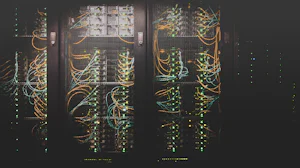
Andreessen Horowitz has launched a new "Machine Age" fund with $1.1 billion raised, according to TechCrunch, marking one of the clearest signals yet that venture capital's center of gravity in AI is shifting from software to the physical machinery that makes it run.
The firm's stated aim with the fund is to "open the throttle and accelerate the physical buildout of AI." Unlike the firm's typical bets on software scalability, the Machine Age fund will concentrate on hardware: a swath of infrastructure that includes everything from computer chips and memory to data centers and robots. It is a notable pivot for a firm whose fortune was built backing asset-light software companies, and it reflects where the industry's bottlenecks — and returns — are increasingly believed to sit. For continuous coverage of the money flowing through the AI industry, follow our AI business news section.
What the Fund Will Actually Buy
In a post on the venture capital firm's website, a16z laid out a shopping list that reads like a diagnosis of the AI industry's supply chain pain. "We need faster, more efficient systems. We need cheaper and higher-bandwidth memory across the memory hierarchy. We need faster and more scalable interconnects between nodes and systems. We need power efficient edge devices for AI to explore and interact with the world," the post reads. "And of course we need all the cooling, materials, electrical, and real estate build out to support them."
That framing matters because each item on the list corresponds to a real constraint that has slowed AI deployment over the past two years. High-bandwidth memory has been in chronically short supply. Interconnect bandwidth limits how large clusters can scale. Electricity, cooling capacity, and suitable land have become the binding constraints on data center construction in many markets.
The Wall Street Journal's Supply Bottleneck Framing
The Wall Street Journal, which reported on the fund's launch before TechCrunch, framed the vehicle as an effort to tackle AI supply bottlenecks. That framing puts a16z in the camp of investors who believe the next wave of returns will come from relieving physical constraints rather than from another layer of application software on top of existing models.
The firm is not shy about its ambitions, either. In its post, a16z called AI the "strongest tool ever developed for solving problems and bestowing abundance," and described advancing it as a "social and national imperative." That language is striking even by the standards of a firm famous for its techno-optimism, and it signals that the fund will likely lean into politically contested areas such as energy and manufacturing.
Venture Capital Follows the Capex
The Machine Age fund arrives amid a broader rush of capital into AI's physical layer. On the same day the fund was announced, TechCrunch reported that neocloud provider Lambda had secured $1 billion in debt financing to buy more chips. Hyperscale cloud providers have been raising their capital expenditure targets repeatedly, and the memory industry has been sold out of capacity for AI-grade DRAM well into the future.
For startups, the significance is straightforward: a $1.1 billion pool that is explicitly earmarked for chips, memory, interconnects, edge devices, robotics, cooling, materials, electrical infrastructure, and data center real estate changes what kinds of companies can realistically get funded. Historically, deep-tech hardware companies struggled to raise venture money because of long development cycles and capital-intensive manufacturing. A dedicated fund signals that the risk calculus has changed — at least for hardware that plugs directly into AI demand.
A 'Machine Age' Thesis
The fund's name is a statement in itself. Rather than framing AI as an information technology, a16z is framing it as an industrial one — an era defined by factories, power plants, supply chains, and machines. The firm wrote that AI advancement is a "social and national imperative," language that aligns with the growing view in Washington and in industry that AI leadership depends on physical infrastructure the United States has struggled to build quickly.
That view has been gaining ground across the industry. Data center operators have complained about multi-year queues for electrical service. Chipmakers have reorganized their supply chains around AI demand. Even consumer-facing AI companies have begun buying computing capacity years in advance to lock in supply.
What to Watch
Several questions will determine whether the Machine Age fund is a landmark or a headline. The first is deployment pace: infrastructure funds live or die on their ability to write large checks into technically risky companies. The second is whether the fund co-invests alongside the giant capital programs already run by hyperscalers, or backs the smaller suppliers those programs depend on. The third is returns — hardware investing has humbled plenty of venture firms before.
What is already clear is that the money is chasing a real shift. The bottleneck in AI is no longer writing better software; it is manufacturing chips, routing power, cooling data halls, and putting robots to work. With $1.1 billion dedicated to exactly that problem, Andreessen Horowitz has placed its largest public bet yet that the next decade of AI value will be built in the physical world.
Stay Ahead of AI
The AI investment landscape is moving fast. Read more AI news on AI Buzz Wire for the latest on funding, infrastructure, and the companies building the AI economy.
Stay on top of every development — visit AI Buzz Wire for breaking AI business news and analysis.