Alibaba Group reported that net income dropped 76% to 10.54 billion yuan ($1.55 billion) in its fiscal first quarter, as the company poured money into artificial intelligence infrastructure and model development.
The results, released Thursday for the quarter ended June 30, crystallize the trade-off now defining China's largest AI business: near-term profitability sacrificed almost entirely for compute, models, and a cloud business that is beginning to pay off at scale. Investors did not take the miss lightly — Alibaba shares fell roughly 7% in the following session, erasing about $21 billion in market value.
The Numbers Behind the Miss
Revenue for the quarter rose 9% year-over-year to 268.95 billion yuan ($39.64 billion), beating analyst forecasts, according to The Wall Street Journal. But nearly every profitability metric moved sharply in the wrong direction. Non-GAAP net income, which strips out share-based compensation and investment gains and losses, fell 38% to 20.72 billion yuan ($3.05 billion). Adjusted EBITA declined 30% to 27.33 billion yuan ($4.03 billion).
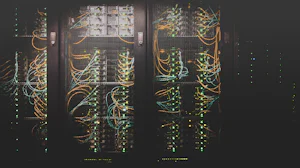
The single clearest line item is capital expenditure: 67.68 billion yuan ($9.98 billion) for the quarter, up 75% from a year earlier, driven primarily by investment in AI infrastructure. Free cash flow was an outflow of 44.67 billion yuan ($6.58 billion), compared with an outflow of 18.82 billion yuan in the year-ago quarter.
The AI Labs Money Pit
The cost center is explicit. Alibaba's AI Labs and Applications segment — which houses its AI model development, the Qwen consumer app, and the QwenWork enterprise agent — posted an adjusted EBITA loss of 13.86 billion yuan ($2.04 billion), more than four times its loss of 3.22 billion yuan a year earlier.
The company attributed the widening loss to increased investment in AI capabilities and higher inference costs tied to the Qwen app, which has become one of China's most widely used AI assistants. The quarter also saw Alibaba reorganize its e-commerce, cloud-computing, and AI-model businesses into new operating groups — a structural change that separates the bleeding-edge AI bets from the profitable commerce core.
Cloud Is the Payoff
Against those losses, the strategic bet is visibly working on the revenue side. Alibaba's AI Cloud and Compute Services segment grew 45% to 48.44 billion yuan ($7.14 billion), and the segment's adjusted EBITA more than doubled, rising 133% to 5.63 billion yuan ($830 million). AI-related product revenue reached 12.38 billion yuan ($1.82 billion), extending a streak of triple-digit year-over-year growth to 12 consecutive quarters.
"We delivered a strong quarter, driven by the improving commercialization of our full-stack AI capabilities," Chief Executive Officer Eddie Wu said in a statement.
The core commerce business delivered a more mixed picture. China E-commerce revenue fell 8% to 110.90 billion yuan, while China Quick Commerce revenue surged 45% to 53.30 billion yuan. The company's 88VIP membership base grew by double digits to approximately 64 million members. The split illustrates Alibaba's broader juggling act: subsidizing instant delivery to defend against Meituan and JD.com on one flank, while funding an AI arms race against ByteDance and a rising field of Chinese model startups on the other.
A Deliberate Gamble
The quarter extends a pattern. In the prior quarter, Alibaba posted adjusted net income of just 86 million yuan and its first operating loss since 2021, as spending on AI infrastructure and quick commerce delivery weighed on earnings. At that time, the company committed to reaching $100 billion in combined annual revenue from cloud and AI within five years, according to Bloomberg.
Alibaba is also pushing to control more of its hardware destiny: the company expects its second-generation T-Head chip to tape out and enter production this year, TechNode reported, reducing reliance on external suppliers for its AI data center buildout. That matters because US export controls have repeatedly reshaped which advanced accelerators Chinese labs can legally buy, making domestic silicon a strategic hedge as much as a cost decision.
The Qwen model family remains central to the strategy. It has surpassed three billion cumulative downloads and become the open-weights champion of choice for developers worldwide, giving Alibaba developer mindshare that rivals spend billions trying to buy. The bet is that open models seed demand, and demand flows to Alibaba's paid inference and cloud platforms — a flywheel the company is now spending more than $2 billion a quarter to keep spinning.
The question for investors is whether the compounding math of a 45%-growth, rapidly profitable cloud business can outrun a consumer AI division burning more than $2 billion a quarter. Alibaba's answer, embedded in Thursday's numbers, is that it has no intention of slowing down until that question answers itself.
Stay Ahead of AI
The tension between AI spending and AI revenue is the defining story of this earnings season. AI Buzz Wire tracks every major result with source-verified reporting — no rumors, no hype.
Read more AI business news →