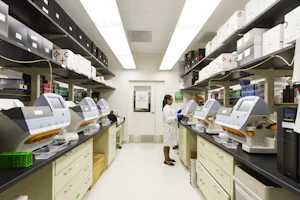
Anthropic has announced a major expansion of its science-focused programs, opening 10,000 seats for scientists around the world to access Claude subscriptions for free and at discounted rates for one year. The announcement, published on Anthropic's news site, also significantly broadens the company's AI for Science program, which provides free credits to researchers working on high-impact scientific projects.
The move, titled "Expanding our support for scientists," positions Claude as a working tool for the research community at a moment when AI labs are competing to prove their models can accelerate real discovery rather than just chat about it. It also comes with a carefully constructed set of safety guardrails for the life sciences. For more on how AI is reshaping the laboratory, follow our AI research coverage.
Free and Premium Seats Through a New Team Plan
The centerpiece of the announcement is a new Claude team plan for scientists. Standard seats will be free, and premium seats with 5x usage limits will be available for $15 per month. The subscriptions run for one year, and Anthropic says it intends to extend the program well beyond the initial 10,000 seats over the coming months.
Eligibility is defined by role rather than field: applicants must be a principal investigator or the equivalent at an academic or nonprofit research institution. Once verified through the company's form, a principal investigator can add the researchers in their lab to the plan, which means a single approval can bring an entire lab group onto Claude.
AI for Science Credits Up to $50,000 Per Project
Alongside the subscriptions, Anthropic is expanding the scope and scale of its AI for Science program. To date, the company says it has largely supported scientists using Claude for biological sciences. The expansion will offer credits to researchers in other scientific fields as well, including teams working on ambitious, compute-heavy research.
Researchers whose labs use up their allotted credits can apply to the AI for Science program for up to $50,000 in credits per project, and any researcher is eligible to apply — not just principal investigators. Anthropic pointed to prior work it says came out of the program, including progress on the Riemann zeta function and Claude's work on protein design, as the kind of compute-heavy science the expansion is meant to support.
Claude Science and the Product Layer
The announcement builds on Claude Science, a product Anthropic launched in June that integrates the tools researchers most commonly use, produces auditable artifacts, and provides flexible access to computing resources. The company's pitch is that scientific work requires more than a chat interface: experiments need to be reproducible, data provenance needs to be traceable, and results need to be auditable by collaborators and reviewers.
By combining subscriptions, credits, and a dedicated product layer, Anthropic is attempting to make Claude the default AI environment for academic research the way incumbent software packages became default infrastructure in earlier eras of science. "By helping scientists access and increase their usage of Claude through subscriptions, credits, and products like Claude Science, we aim to radically accelerate scientific discovery," the company wrote.
Safeguards Stay Firm for Biology and Chemistry
The expansion comes with explicit limits for the most sensitive domains. For now, researchers working in biology and chemistry will be limited to Anthropic's Opus-class models. Claude Fable models will continue to block professional biology and drug development queries because of their potential dual-use risks.
The company also disclosed a government partnership on this front: Anthropic is working with the US government to establish an access program for life sciences professionals to use Mythos-class models for life sciences research and development. The company says it has now enrolled its first participants in that program and expects to share more and increase access over time.
That structure — broad commercial and academic access for general-purpose use, restricted access for high-risk biology, and a vetted government-supervised pathway for advanced life sciences work — mirrors the layered approach Anthropic has taken as its models have grown more capable.
Why It Matters
The battle to win over the scientific community has strategic value beyond the subscription revenue. Researchers who build their workflows around a particular AI system tend to carry it into spinouts, industry collaborations, and teaching. Labs that train the next generation of scientists effectively set the defaults for the field.
The free tier also lowers the barrier for exactly the kind of high-risk, compute-hungry academic research that companies typically cannot justify supporting commercially. If the program produces visible wins — a notable proof, a new protein design, a faster materials discovery — it strengthens Anthropic's argument that frontier AI is a scientific instrument, not just a productivity tool.
For scientists, the practical takeaway is straightforward: principal investigators at academic and nonprofit institutions can apply now, and the $15 premium tier offers a substantial usage increase for labs that hit the free limits. The open question is how quickly Anthropic can expand beyond the initial 10,000 seats, and whether rival labs respond with similar programs of their own.
Stay Ahead of AI
AI in science is advancing quickly. Read more AI news on AI Buzz Wire for the latest on models, research, and the tools shaping discovery.
Stay on top of every development — visit AI Buzz Wire for breaking AI research news and analysis.