Despite hundreds of billions of dollars in investment and near-constant hype, artificial intelligence has delivered no measurable financial payoff for corporate America outside the technology sector. That is the central claim of a note published October 24 by Torsten Slok, partner and chief economist at Apollo Global Management, in the firm's Daily Spark series.
"Despite massive investments and widespread hype around artificial intelligence, the technology has delivered zero financial payoff to corporate America outside of tech," Slok wrote. The note quickly drew wide attention online, becoming one of the most-discussed links on Hacker News within hours of publication. For more context on this story, see our ongoing AI news.
What the Data Shows
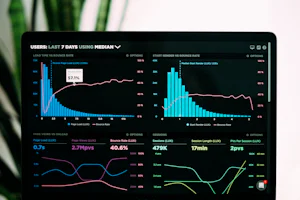
Slok's argument rests on three charts built from Bloomberg, Macrobond, and Federal Reserve data:
1. Revenue per worker is rising for the Mag 7 — Alphabet, Amazon, Apple, Meta, Microsoft, Nvidia, and Tesla — but remains flat for the other 493 companies in the S&P 500.
2. Profit margins tell the same story: expanding for the tech giants, flat for the S&P 493.
3. Productivity growth shows no sign of an AI boost. Slok cites the utilization-adjusted Total Factor Productivity series maintained by the Federal Reserve Bank of San Francisco, which shows no inflection since generative AI adoption accelerated.
The pattern matters because the S&P 493 is where most of the US economy actually lives — hospitals, manufacturers, retailers, banks, and logistics firms. If AI were a general-purpose technology already transforming business, Slok argues, that transformation should be visible in the aggregate numbers of the non-tech economy. So far, it is not.
The divergence also helps explain an awkward fact of this investment cycle: the enormous returns attributed to AI have accrued almost entirely to a handful of hyperscalers and chipmakers, while the vast majority of listed companies have absorbed rising technology budgets without showing commensurate revenue or margin gains. In Slok's framing, that is not a temporary lag unique to this cycle — it is the visible signature of a technology whose benefits remain confined to its sellers.
Token Spending Becomes a Cost Center
Perhaps the most striking claim in the note is how mainstream companies are repositioning AI in their budgets. Rather than treating model usage as a source of growth, Slok writes, "mainstream corporate America is pulling back and starting to view token spending not as a source of growth but as a cost center that weighs on margins."
He draws a sharp contrast with the venture-backed startup ecosystem, where AI token consumption continues to climb. The difference, in his telling, is necessity: venture-backed companies are building products on top of the latest models, while established firms "do not need the latest model and are unwilling to pay for it."
"As long as agentic AI and token spending are confined to a small part of the economy, the macroeconomic effects of AI will be very limited," Slok writes, citing AI spending data from the Ramp AI Index.
'Intelligence Is Mostly Judgment'
The note's most quoted passage addresses why cheaper intelligence may not translate into fatter margins even as model prices fall.
"AI may be a great calculator, but in business, intelligence is mostly judgment," Slok writes. "Judgment depends on context, and the answer varies with which human or which model you ask."
He goes further, arguing that AI lacks the social faculties on which commercial trust is built: "AI does not understand accountability, trust, culture, unwritten rules, ethical trade-offs or fairness, all of which shape reputational risk and ultimately drive revenue growth and profit margins."
Slok's bottom line is blunt: "The AI story will be decided in the S&P 493, not the Mag 7, and so far, there is no evidence that revenue growth or margins are improving outside the tech sector."
Important Caveats
There are reasons to treat the verdict as preliminary rather than final. Productivity statistics have historically lagged technology diffusion by years — electrification and computers followed similar patterns, with measured gains arriving long after the capital was deployed. Flat margins can also reflect competitive dynamics unrelated to AI, and revenue-per-worker metrics blend countless non-technology factors.
It is also worth noting the source: Apollo is one of the world's largest alternative asset managers, and Slok has been an outspoken voice in the debate over whether AI infrastructure spending echoes the dot-com bubble. His firm's perspective is that of a credit investor watching leveraged borrowing fund data centers — a viewpoint that shapes, though does not invalidate, the analysis.
Still, the note lands at a sensitive moment for the AI trade. Public markets have concentrated an enormous share of this cycle's gains in a handful of hyperscalers, and the investment case for the rest of the market increasingly depends on evidence that AI tools lift profits beyond the companies selling them. On that specific question — the one that matters most for whether the boom broadens or stalls — Slok's answer, as of October 24, is that the evidence has not arrived.
Source: Apollo Global Management — The Daily Spark---
Stay Ahead of AIGet the latest AI news, analysis, and breakthroughs — all in one place.
Read more AI news →