A new rule proposed by the Trump administration would dismantle the requirement for datacenters to publicly disclose their air pollution, public health advocates warn — allowing emission permits for the facilities powering the AI boom to be issued behind closed doors.
The proposal, revealed in recent days by the Environmental Protection Agency, targets the Clean Air Act provision requiring "minor" air polluters to disclose to the public, via state agencies, how much pollution a proposed project will release. For datacenter projects, that disclosure would instead become voluntary, at the discretion of state and some local officials. For more context on this story, see our ongoing latest AI developments.
Many state political establishments actively support datacenter development, and observers say it is unlikely most would voluntarily require big tech companies to hand over the information.
What Datacenters Emit
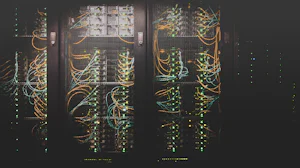
Datacenters are often significant sources of nitrogen oxide, which helps form ozone, as well as carbon monoxide and heavy metals, among other pollutants. Many datacenter developers apply for minor-source pollution permits to cover the up to dozens of diesel generators or gas turbines used to power their facilities or provide backup generation.
The EPA delegates monitoring of "minor" pollution sources to state authorities, while it directly handles major polluters such as gas plants. The minor-source permits are meant to ensure facilities comply with federal limits on six pollutants linked to asthma, heart disease and cancer.
According to The Guardian's reporting, big tech companies often divide datacenter pollution permit requests into individual pieces — one for each generator or turbine — so that each falls under the "minor" state-level reviews, avoiding a larger, more costly and more legally difficult review by the EPA itself.
Removing the Public's Voice
Joe Goffman, a former assistant administrator for the EPA's office of air and radiation, said the Clean Air Act is supposed to offer "an ironclad promise" that the entire American public gets a voice when pollution sources are permitted.
"The administration is basically saying: 'You all may have thought this was an ironclad promise, but it no longer is,'" Goffman said. He co-authored comments on the proposed rule submitted by the Environmental Protection Network, a coalition of former agency employees.
Without disclosure data, communities near new facilities would not know what they are breathing once a datacenter is built — and would have far less ability to push back in court or in public forums.
The EPA has just closed the public comment period on the proposal, and the rule could face a legal challenge if it is finalized.
The proposal's mechanics matter beyond datacenters. The Clean Air Act's minor-source disclosure provisions apply to a wide universe of smaller industrial polluters, and public health groups warn that carving out an exemption for one fast-growing category — precisely the category with the deepest corporate pockets and the most aggressive build-out schedule — could set a template for other industries seeking quieter permitting. Goffman noted that the law's public-participation promise was written to be universal, not discretionary.
The AI Build-Out Behind the Rule
The move comes amid a national surge in datacenter construction driven by the artificial intelligence boom, with hyperscalers racing to stand up the compute capacity that large language models and other AI systems demand.
The scale of that build-out has begun to generate visible public resistance. Demonstrators held up "Stop Data Centers" signs as President Donald Trump spoke at the General Motors Proving Ground testing facility in Milford, Michigan on July 27, 2026 — a signal of the community friction that disclosure requirements might otherwise help surface.
Critics of the proposed rule argue that removing public notification is intended precisely to curb that kind of criticism and oversight, insulating one of the country's fastest-growing industrial build-outs from the communities it affects.
What Happens Next
If the rule is finalized, decisions about whether the public learns anything about planned datacenter pollution would rest with state and local regulators — a patchwork that varies widely by jurisdiction. Public health groups have signaled that litigation is likely, setting up a fight over how much transparency Americans are owed from the infrastructure of the AI economy.
The stakes of that patchwork are considerable. The Guardian's reporting notes that the minor-source permit system is one of the few formal mechanisms neighbors have for learning what a proposed facility will emit before it is built. Community groups have used such disclosures in other contexts to negotiate pollution controls, demand monitoring, or oppose projects outright — options that largely disappear if states simply stop asking for the data.
For an industry whose leading companies tout their climate commitments, the proposal poses an uncomfortable question: if datacenter pollution is modest enough to qualify as "minor," why not say so publicly? The answer, advocates fear, is that the aggregate emissions of dozens of generators and turbines across hundreds of new sites are anything but minor — and that the rule's real purpose is to keep that arithmetic out of public view.
---
Stay Ahead of AIGet the latest AI news, analysis, and breakthroughs — all in one place.
Read more AI news →