Google said Wednesday it will invest at least €13 billion (about $15.1 billion) in artificial intelligence infrastructure in Finland over the next two years, according to Reuters — one of the largest single-country AI infrastructure commitments the company has announced in Europe.
The announcement, made from Helsinki and confirmed in a Google Cloud press release titled "Google Deepens Commitment to Finland with Two-Year €13 Billion Investment in AI Infrastructure," was also reported by Bloomberg and by Finland's national broadcaster Yle. Google did not initially detail every component of the spend, which covers data center capacity and related AI infrastructure across the two-year window. For more context on this story, see our ongoing artificial intelligence updates.
Finland Is Becoming an Unlikely AI Power Hub
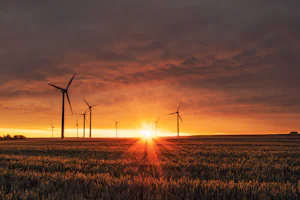
The investment lands in a country that has quietly become one of Europe's most attractive locations for compute. Finland combines cool climate — which cuts data center cooling costs — abundant renewable power, and a grid that has handled industrial-scale loads for decades.
Google is not alone in betting on it. Just a day earlier, CNBC reported that TikTok's parent company ByteDance is expanding its data center capacity in Finland amid the same AI infrastructure boom. And the region has been on accelerator-maker Nvidia's map for months: an August CNBC report described Nvidia playing matchmaker in the Nordics — connecting companies that buy its GPUs with data center operators that have capacity to deploy them — in what the report called one of the world's fastest-growing AI infrastructure regions, where gigawatts of capacity are due to be built in the coming years.
For Nordic governments, the pattern is welcome: AI data centers bring construction jobs, multi-year tax revenue, and grid investment, with Finland positioning itself as the neutral, energy-rich floor of Europe's AI stack.
What a Two-Year, €13 Billion Commitment Typically Covers
Announcements of this size are rarely a single building. AI infrastructure spend at this scale generally spreads across land and shell construction, power substations and grid connections, cooling systems, networking, and ultimately the accelerators themselves — with the chips typically representing the largest single line item. Google's release framed the program as data center capacity plus related AI infrastructure, without a component-level breakdown, so the precise split between buildings and hardware remains to be detailed.
The scale is easier to grasp against the region's trajectory: gigawatt-class Nordic capacity pipelines, of the kind CNBC described, are sized in exactly the range that a multi-billion-euro, two-year national program can move from planned to under construction.
Europe's AI Money Is Moving in One Direction
Google's pledge is the latest in a string of enormous capital commitments to European AI in a single week. On Monday, France's Mistral AI closed a €3 billion funding round led by Samsung — reported as the largest equity raise in European tech history — money that is expected to fund compute and model development on the continent.
The direction of travel is clear: after two years in which European AI policy was mostly about regulating everyone else's models, European capital, land, and power are now being pulled into the build-out itself. HyperScaler investment of this scale typically arrives where three things coincide — cheap power, political stability, and permitting speed — and Northern Europe currently offers all three.
Why the Two-Year Window Matters
The two-year timeline Google attached to the pledge is aggressive by data center standards, where large campuses can take longer than that from groundbreaking to first rack. Committing to spend the full €13 billion within 24 months signals that capacity — not land banking — is the goal, and that much of the investment will flow to expanding existing sites and accelerating projects already in Google's Finnish pipeline.
It also functions as a competitive statement. Every major AI player now measures its position in gigawatts and GPU-hours; publicizing a €13 billion national commitment is a way of telling enterprise customers and regulators alike that Google's European capacity is growing on a schedule they can plan around. Rivals announcing their own European builds this week only sharpen that logic.
What to Watch
Three things will determine whether the pledge translates into working compute on schedule:
Grid and permitting. Finland's grid is robust, but multi-gigawatt-scale additions still require transmission upgrades and local approvals that have historically moved slowly even in Nordics-friendly jurisdictions. Power allocation. As data centers, electrified industry, and households compete for the same renewable supply, how Finnish authorities prioritize AI compute loads will shape how much capacity actually gets built. The follow-through question. Two-year corporate investment pledges often bundle commitments that were already underway. Analysts will look for Google to break out what is genuinely new capacity versus reclassified spend.Either way, the message from Helsinki is hard to miss: the AI infrastructure race now has a northern front, and Google just opened it with the largest cheque.
---
Stay Ahead of AIGet the latest AI news, analysis, and breakthroughs — all in one place.
Read more AI news →