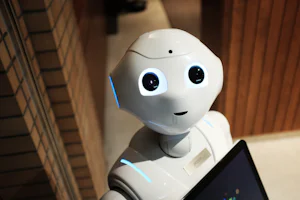
Announced on July 30, 2026, the release centers on a vision-language-action (VLA) model that converts what a robot sees and hears into precise motor commands. DeepMind describes it as the intelligence layer for general-purpose robotics, and the company positioned the launch as a turning point in bringing AI out of chat windows and into the physical world. For more on the broader industry push toward embodied AI, follow our breaking AI news.
Three Models, One System
DeepMind shipped three complementary models in the Gemini Robotics 2 lineup:
- Gemini Robotics 2 — the flagship VLA model that translates vision and language into motor control, enabling a robot to take physical action.
- Gemini Robotics ER 2 — an embodied-reasoning model capable of understanding physical spaces and producing detailed, multi-step plans that coordinate with humans and other robots.
- Gemini Robotics On-Device 2 — a lightweight version of the VLA model optimized to run locally on robotic hardware, reducing dependence on cloud connectivity.
According to the DeepMind blog, each model has a specialist role but the trio is designed to operate as a single integrated system. The VLA model handles real-time action, the ER model handles higher-level planning, and the on-device variant enables low-latency responses on the robot itself.
From Feet to Fingertips
The most striking claim in the announcement is what DeepMind calls intelligent whole-body control. Rather than training a robot to repeat one motion, Gemini Robotics 2 is designed to command an entire humanoid body — from feet to fingertips — enabling full-range human-like movements including bending, reaching, and balancing.
DeepMind highlighted several dexterity benchmarks. In demonstrations, robots powered by the model were shown screwing in light bulbs, tying knots, and performing other delicate actions that require fine motor control. The lab said the system achieves a new level of dexterity that lets robots complete tasks demanding genuine finesse rather than brute repetition.
The company also emphasized adaptability. Gemini Robotics 2 can be adapted to any bi-arm robot in just a few hours, DeepMind said, which means the same underlying intelligence can scale from a tabletop arm to a complex humanoid without a full retraining cycle. This generalization is a significant departure from conventional robotics, where each machine typically requires purpose-built software.
Robots Working Together
Another headline capability is multi-robot collaboration. DeepMind said Gemini Robotics 2 supports scenarios in which two robots work together on a single task, dividing labor in a shared physical space. The ER 2 model handles the coordination — reasoning about the environment, mapping out a multi-step sequence, and allocating steps between machines.
In one demonstration cited by the company, a pair of robots collaborated to clean a room, splitting the job rather than bumping into each other. DeepMind framed this as early evidence that AI can manage not just individual actions but the orchestration of multiple agents in the real world.
Interactive and Instructable
Beyond autonomous operation, the models are designed to be interactive. Gemini Robotics 2 can explain its approach while performing an action, and users can redirect a robot mid-task using everyday language rather than technical commands. DeepMind said this makes the platform well suited for instructing robots in volatile or hazardous environments where human operators need to adjust plans on the fly.
Why It Matters
The launch intensifies an already crowded humanoid-robotics race. Companies including Figure, Boston Dynamics, and Tesla have been racing to commercialize walking, working machines, while chipmakers such as Nvidia have invested heavily in the simulation and compute infrastructure that physical AI requires.
DeepMind's bet is that a single, general-purpose intelligence layer — one that reasons about the physical world the way a chatbot reasons about text — can replace the bespoke, narrow software that has defined industrial robotics for decades. If the system can indeed adapt to any embodiment in hours, it would lower the barrier for manufacturers and researchers looking to deploy capable robots without starting from scratch each time.
The company said it is working with trusted hardware partners to expand the platform, and it published responsibility and safety documentation alongside the release. Questions remain about how these models perform outside of controlled demonstrations and how quickly whole-body humanoid control can translate into reliable, real-world deployment.
Still, the breadth of the launch — whole-body movement, multi-step reasoning, on-device efficiency, and multi-agent coordination in a single product family — signals that Google intends to be a primary player in the convergence of large AI models and physical machines.
Stay Ahead of AI
The robotics frontier is moving fast, and AI Buzz Wire is tracking every major development. Read more AI news for continuous coverage of model releases, hardware breakthroughs, and industry shifts.
Explore the latest AI developments →