John Ternus officially became Apple's chief executive officer on September 1, 2026, marking the company's first leadership change at the top in 15 years. The transition, reflected on Apple's leadership page Tuesday morning and reported by The New York Times, MacRumors, and The Verge, ends Tim Cook's 15-year run as CEO of one of the world's most valuable companies. Cook is not leaving Apple entirely: he moves into a newly created executive chairman role on the company's board of directors.
According to details shared by Apple and reported by MacRumors, Cook will assist with certain aspects of the company in his new position, including engaging with policymakers around the world. In a farewell letter to employees cited by The Verge, Cook wrote, "This place is proof that culture triumphs over everything. We share a belief that what we build matters, and that we have both the opportunity and the responsibility to leave the world better than we found it." On his final day as CEO, Cook visited the Apple Park Visitor Center in Cupertino to meet retail employees from various stores.
For continued coverage of how the tech industry's biggest companies are navigating the AI transition, follow our latest AI developments.
Who Is John Ternus?
Ternus is a roughly 25-year Apple veteran whose career there has been rooted in hardware. He joined the company in 2001 as part of its product design team, became vice president of hardware engineering in 2013, and was promoted to senior vice president of hardware engineering in 2021 — the role in which he led hardware engineering across Apple's device lines, including the Mac and iPhone.
At 51 years old, Ternus could lead Apple for 10 to 15 years before reaching typical retirement age, as MacRumors noted, giving the board a long runway compared with many incoming CEOs of his generation. His ascent signals that Apple's board prioritized a product and engineering leader over candidates from services or operations backgrounds.
An In-Tray Dominated by AI
Ternus takes over at a moment when artificial intelligence sits at the center of Apple's strategic challenges. The Verge characterized the company he inherits as dealing with "the rise of AI, shortages of RAM and other components due to that growth in AI, and a political and economic situation that is only getting more complicated as time passes."
The memory shortage point is particularly consequential for Apple. As AI data centers absorb staggering volumes of DRAM and NAND flash, component costs have climbed across the industry — a squeeze Apple has already acknowledged on earnings calls when discussing rising memory prices and its iCloud compute investments. Balancing premium device margins against component inflation driven by a buildout Apple does not control will be one of the new CEO's most immediate tests.
Apple has also faced sustained pressure over the pace of its own AI efforts, with its Siri overhaul repeatedly delayed while rivals shipped assistant features and agentic tools at a rapid clip. As a hardware executive, Ternus built his reputation on products, and observers will be watching whether the on-device AI strategy — running models locally on Apple silicon — accelerates under his leadership.
First Big Test Comes September 9
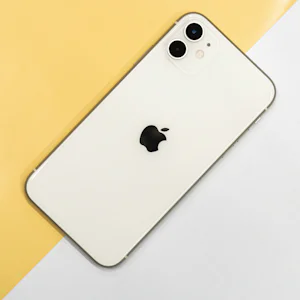
Ternus will have little time to settle in. Apple has set its next iPhone launch event for September 9, according to Reuters, making it the first major product announcement of the Ternus era just over a week after he took office. The event is expected to introduce the iPhone 18 Pro lineup and Apple's first foldable iPhone, per MacRumors, one of the most significant hardware generations in recent company history.
That timing gives Ternus a high-profile stage to articulate his vision, but also little margin for error. Product launches under new CEOs are often read as statements of intent, and the foldable debut in particular will be scrutinized as evidence of whether Apple's hardware innovation cadence continues under new management.
A Broader Leadership Shake-Up
The CEO change is part of a wider transition in Apple's executive ranks. Phil Schiller, the longtime marketing chief who led the App Store and Apple's events, is scaling back his role and will continue as an Apple Fellow after handing off his day-to-day duties, Bloomberg reported. The Verge published a side-by-side look at Apple's senior leadership team before and after the change, underscoring how many Cook-era and even Jobs-era figures are moving on or out.
Cook's shift to executive chairman, with an explicit mandate to engage policymakers worldwide, suggests Apple wants his institutional relationships — cultivated over decades with governments in Washington, Brussels, and Beijing — to remain at the company's disposal even as a new generation takes the operational reins.
What to Watch Next
For the AI industry, the transition matters beyond Apple itself. The company remains one of the largest purchasers of custom silicon and a bellwether for on-device inference, and its posture on AI regulation is closely watched in both the United States and the European Union. If Ternus doubles down on local AI processing across iPhones, Macs, and Vision Pro, it could reshape demand patterns across the semiconductor supply chain that the rest of the AI ecosystem depends on.
For now, the era has formally begun. Apple's leadership page tells the story in a single line: from Jobs, to Cook, to Ternus.
---
Stay Ahead of AIGet the latest AI news, analysis, and breakthroughs — all in one place.
Read more AI news →