For three years, the AI industry's defining scarcity was the GPU. That bottleneck is starting to ease — and a new one is taking its place: how to connect those GPUs together fast enough. Startup Lumilens emerged from stealth this week with more than $900 million in total funding to attack exactly that problem, betting that the future of AI data centers runs on light rather than copper. Read the latest AI hardware developments at aibuzzwire.news.
Lumilens raised over $700 million in a Series C round that values the company at $5.51 billion, pushing its total capital above $900 million. The round was co-led by Atreides Management, Bain Capital Ventures, Meritech, Seligman Ventures, and Spark Capital, with more than a dozen other investors participating, including Qualcomm Ventures and J.P. Morgan Private Capital. Peak XV and EDBI also joined, according to DealStreetAsia.
Replacing Copper With Light
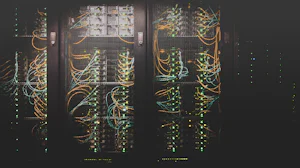
The company's core claim is that copper wiring — the physical cabling that moves data between chips today — is running out of headroom as clusters grow to tens of thousands of GPUs. Lumilens builds what it calls the LumiCore platform: a stack combining silicon photonics, mixed-signal integrated circuits, optical systems, and its own manufacturing processes, designed to take a product from initial design to customer qualification in months rather than years.
"The constraint on AI has shifted from how many GPUs you can buy to how many you can connect," founder and chief executive Ankur Singla said in the company's launch. "Hyperscalers need far more optical capacity and a path to directly connecting thousands of GPUs together into a single cluster."
Already Shipping to a Hyperscaler
Unlike many optics startups still working toward production, Lumilens says it is already shipping. Two years after its founding in 2024, the company reports that it is delivering its first optical interconnect products into a hyperscaler's production data centers under what it describes as a multi-billion-dollar customer agreement. That early revenue traction helps explain the valuation.
Singla is a repeat infrastructure founder. He built Contrail Systems, which Juniper Networks acquired in 2012 for roughly $176 million, and then Volterra, an edge-cloud platform that F5 bought for close to $500 million in 2021. He is joined by co-founder and chief technology officer Ted Schmidt, a former distinguished engineer at Juniper who worked on its silicon photonics program after its 2016 acquisition of Aurrion and later held senior roles at Lumentum and Effect Photonics.
A Heavily Capitalized Field
Lumilens is entering one of the most hotly funded corners of AI infrastructure. Lightmatter raised a $1.2 billion Series F in July 2026 at a $12 billion valuation. Ayar Labs pulled in $500 million from Nvidia and AMD in March 2026 at a $3.75 billion valuation. Celestial AI closed a $750 million Series D in June 2026 at a $6 billion valuation, backed by Fidelity and BlackRock. Smaller players — Spain's iPronics, Zurich's Aylight, and Italy's CamGraPhIC — are chasing the same problem from different angles.
The money is following the market. Citigroup estimates that AI infrastructure spending will exceed $2.8 trillion by 2029, and a growing share is flowing into the optics needed to keep pace. Nvidia alone has committed $2 billion to Lumentum for silicon photonics manufacturing, a signal that the GPU giant itself sees connectivity as the next frontier.
Why Connectivity Is the New Bottleneck
The logic behind the optics boom is straightforward. As models scale, training them requires linking ever-larger clusters of GPUs that must exchange vast amounts of data with minimal delay. Copper interconnects impose limits on bandwidth, reach, and power consumption that become punishing at scale. Optical links promise higher bandwidth over longer distances at lower energy cost — if they can be manufactured reliably and cheaply.
That manufacturing challenge is where Lumilens believes it has an edge. By keeping design, the mixed-signal chips, the optical systems, and the production process under one roof, the company argues it can compress development timelines and hit the volumes hyperscalers demand. Whether it can out-execute well-funded rivals like Lightmatter and Ayar Labs will determine if its early lead holds.
For now, the broader signal is unmistakable: in the next phase of the AI build-out, the money and the engineering talent are flowing toward the wires — or rather, the light — that hold the whole system together.
---
Stay Ahead of AI
Get the latest artificial intelligence news, analysis, and breakthroughs — all in one place.
Read more AI news →