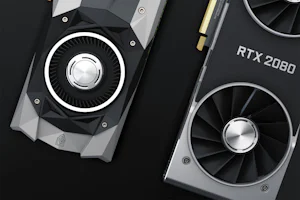
Marlowe, a startup founded in May by Convoy co-founder Dan Lewis, has raised $277 million in seed funding to design, build, and operate AI data centers purpose-built for inference workloads running on non-Nvidia chips. The announcement, published on the company's website Monday and reported by Bloomberg, makes Marlowe one of the most heavily capitalized seed-stage companies in AI infrastructure to date.
The round's named institutional investors include Accel, Bessemer, Altimeter, Atreides, and Eclipse, alongside other venture firms and angel investors, according to coverage by Unite.AI. Lewis serves as chief executive; co-founder Kutta Srinivasan — GeekWire, which covered the launch, described the founding pair as a Convoy co-founder and a former Microsoft leader — is chief technology officer. The company was founded in collaboration with Lior Susan, Ido Susan, and Stanford professor Chris Ré.
In its announcement, Marlowe frames the demand shift in sweeping terms: the massive training investments of the past several years have produced models skilled at coding, task completion, real-time chat, summarization, content creation, agentic tool use, and research, making AI "as fundamental to daily life as electricity or the internet." All of that usage, the company argues, translates into inference — and inference is where today's infrastructure falls shortest.
The Case Against One-Size-Fits-All AI Factories
Nvidia pioneered the "AI factory" concept by integrating GPUs, CPUs, networking, and a full software ecosystem into a turnkey platform, and the industry built ever-larger training clusters on top of it. Marlowe's founding argument is that the center of gravity has shifted: inference, not training, is now the workload driving demand, and general-purpose GPU clusters were never designed for it.
"Inference usage is growing faster than supply can keep up, increasing costs and throttling usage," the company wrote in its announcement. Existing clusters "aren't optimized for inference," while financing, construction, permitting, regulation, and power constraints make new capacity hard to bring online. Marlowe points to data-center construction costs rising 40% since 2020, with many projects delayed or cancelled — a dynamic that makes every available watt more precious.
The company's critique of the Nvidia-centered model cuts two ways. A single general-purpose system cannot serve every training and inference workload efficiently — a coding agent, a voice assistant that must respond in under a second, and long-document analysis place very different demands on infrastructure. And dependence on one chipmaker concentrates supply-chain risk at the industry level. In the announcement's framing, Marlowe is "building the bridge across NVIDIA's moat."
Marlowe illustrates the mismatch with a transportation analogy: relying on a single general-purpose system for all workloads, it writes, is "like only having access to SUVs — ideal some of the time, but not the most energy efficient, fast, or economical solution when a bike, sedan, train or jet is best." The company also argues that the industry's existing playbook owes its shape to the training era, when hyperscalers and "former-crypto-turned-Neocloud companies" stood up modern AI data centers as fast as possible around Nvidia's stack.
How Marlowe Plans to Build
Rather than supplying identical configurations to every customer, Marlowe plans to co-design the full stack for each major workload class — from chip selection and facility design up through the software that manages servers, executes models, and routes tokens. The design variables it lists include response time, CPU-to-GPU ratio, model size and architecture, input-to-output ratio, security, and price sensitivity.
The company argues that optimizing data-center and inference layers independently strands power and underutilizes compute, and projects that gains across networking, power management, AI-driven fleet operations, and workload-specific optimization can compound into a 2–3x overall advantage in performance, availability, resiliency, and cost. Its headline operating metrics: tokens per watt, tokens per dollar, and GPU uptime.
Chipmakers Are Signing On
The strategy has drawn early commitments from alternative-silicon vendors. AMD senior vice president of AI Vamsi Boppana said AMD expects to deploy its Helios system with Marlowe in 2027, crediting the startup with contributions to AMD's software ecosystem. Etched co-founder and president Rob Wachen said Etched expects to deploy its first inference clusters with Marlowe during 2026.
Marlowe says its first site will go live in December 2026, and that its team embeds with AI application companies to optimize their workloads for alternative silicon. Its target customers are AI application and platform companies seeking more compute capacity at lower cost; the company is hiring across data-center engineering, infrastructure software, and hardware-software co-design.
A Real Test for the Post-Nvidia Thesis
The raise lands amid surging investor interest in loosening Nvidia's grip on AI compute — a wave that has funded new chip designers, inference-optimized clouds, and software layers that translate models between hardware targets. Marlowe's bet is distinct: rather than betting on any single alternative chip, it is betting that the factories themselves, co-designed around specific inference workloads, are where the margin lives.
Those deployments will test whether the coordinated design approach can make alternative silicon practical for paying customers while delivering the efficiency gains the company has projected. With the first site due online within weeks, the answer will not be far off.
---
Stay Ahead of AIGet the latest AI news, analysis, and breakthroughs — all in one place.
Read more AI news →