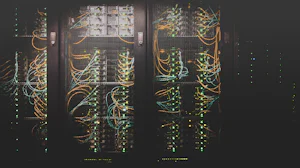
Meta has avoided billions of dollars in federal taxes by classifying its AI data centers as "experimental" projects eligible for research tax credits, according to an investigation published Wednesday by The New York Times. The report estimates the company's tax savings at roughly $5.9 billion, a figure that lands at the center of an intensifying political fight over who ultimately pays for the AI infrastructure boom.
The mechanism, as described in the Times reporting and summarized by outlets including Quartz and Anadolu Agency, hinges on the federal research tax credit — a provision designed to reward genuine scientific experimentation. By labeling data center construction and equipment in ways that qualify as experimental research, Meta has been able to claim credits on facilities that will ultimately serve thoroughly commercial purposes: training and serving AI models used by billions of people and, increasingly, monetized through advertising and enterprise contracts. The strategy illustrates a broader pattern in our AI industry coverage: the enormous capital costs of the AI race are being quietly distributed across taxpayers as well as shareholders.
How 'Experimental' Became a Billion-Dollar Word
The scale of modern AI data centers is hard to overstate. Meta's superintelligence-era buildout involves sites consuming gigawatts of power, packed with accelerators and networking gear that rank among the most expensive equipment ever deployed by a private company. Under the research credit framework described in the investigation, portions of that spending — hardware, engineering and construction tied to cutting-edge systems — can be positioned as experimental rather than ordinary commercial infrastructure.
The New York Times' findings arrive just days after Senator Elizabeth Warren sent questions to Meta, Google, Amazon and Microsoft about their use of AI-related tax subsidies, as reported by CNBC on Monday. Warren's inquiry zeroed in on the same fault line: tax provisions written to incentivize innovation are being applied to some of the most profitable corporations in history as they race to build the largest compute fleets on earth.
The Political Math of the AI Buildout
The timing makes the findings politically explosive. Congress and the administration have spent the past year courting data center investment, and states have competed with escalating tax abatements to attract the facilities. Meta itself has been among the most aggressive builders, publicly framing its data center program as a national asset in the race toward superintelligence. The Times investigation reframes that patriotism in ledger terms: while the company presents its buildout as a civic contribution, it is simultaneously reducing its own federal tax burden through aggressive classification of the very same projects.
The debate also lands amid growing public skepticism about AI economics. A widely cited Bain & Company analysis this week warned that the AI industry needs on the order of $6 trillion in annual revenue by 2031 to justify its data center spending — a gap that makes every dollar of tax relief more contentious. If the business models do not eventually close that gap, the argument goes, taxpayers will have subsidized infrastructure that never delivered the returns its builders promised. Meanwhile, The Wall Street Journal has documented states already ripping up data center tax deals as the fiscal costs mount.
What Meta Says — and What Comes Next
Companies that use research tax credits routinely defend the practice as lawful, and Meta is likely to argue that its AI engineering genuinely pushes scientific frontiers — training frontier-scale models is arguably an experiment in the most literal sense, with uncertain outcomes and novel engineering challenges at every layer. The tension is definitional: Congress wrote the credit to reward research that benefits the public, and whether a trillion-dollar advertising company's training clusters qualify is exactly what the dispute is about.
What happens next will play out on several tracks. Warren's inquiry could escalate into legislation narrowing the research credit as applied to data centers, and the Times findings give other lawmakers a concrete figure — $5.9 billion — to anchor hearings and floor speeches. The Treasury Department and IRS face pressure to clarify how aggressively experimental classifications can stretch. And with every hyperscaler now building AI infrastructure at unprecedented scale, whatever Meta's arrangement turns out to be legally, its disclosure reshapes the public understanding of who is really paying for the AI boom — and by how much.
For now, the investigation adds a fresh line to the growing list of costs the AI race is pushing onto the public: the power, the water, the state tax deals — and, if the findings spur action, a reconsideration of the federal tax provisions that have quietly made Washington a co-investor in the largest construction project in corporate history.
---
Stay Ahead of AIGet the latest AI news, analysis, and breakthroughs — all in one place.
Read more AI news →