The White House has publicly accused Chinese AI startup Moonshot of stealing technology from U.S. rival Anthropic, escalating a technology dispute that is now drawing in the Treasury Department, Congress, and the global open-source community. The allegations center on a practice known as "model distillation" — and they could reshape how AI models are regulated worldwide. For ongoing AI policy developments, the Moonshot case has become a defining test case.
White House Levels the Accusation
The South China Morning Post reported that a top Trump administration technology official accused China's Moonshot AI of stealing from Anthropic. The BBC corroborated the account, reporting that the official said Moonshot "stole" from the U.S. AI company. Semafor independently confirmed that the U.S. government says "China's Moonshot stole from Anthropic."
The specific allegation is technical but consequential. The Hill and Yahoo Finance reported that the White House official accused Moonshot of "distilling" Anthropic's Fable model — the company's frontier reasoning system. Distillation is a technique in which a smaller, cheaper "student" model is trained to mimic the outputs of a larger, more expensive "teacher" model, effectively copying its capabilities without access to the original training data or weights.
Banned Nvidia Chips
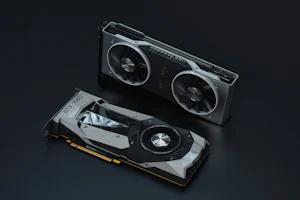
The accusations extend beyond intellectual property. Bloomberg reported that a U.S. official said Moonshot had accessed banned Nvidia chips — advanced semiconductors that Washington has restricted from export to China over national-security concerns. The claim suggests Moonshot may have circumvented U.S. export controls to obtain the compute needed to train or run its models.
Together, the twin allegations — stealing model intelligence and acquiring prohibited hardware — form the basis for what could become the first targeted sanctions against a Chinese AI company for model-related misconduct.
Treasury Threatens Sanctions
TechCrunch reported that the Treasury Department has threatened sanctions after the White House claimed Moonshot distilled Anthropic's technology. The warning builds on remarks reported earlier in the week by CNBC and Bloomberg, in which Treasury Secretary Scott Bessent said the United States could impose sanctions on China over the alleged theft of American AI models, even as the two countries prepare for a new round of bilateral AI discussions.
Bitcoin World and Asia Times added further detail, reporting that the Treasury's sanctions warning specifically targets Moonshot over the distillation of Anthropic's Fable model. The Cryptonomist described the move as U.S. Treasury AI sanctions "targeting Moonshot over Anthropic IP theft claims."
Congress Targets Distillation Itself
The executive branch is not acting alone. Startup Fortune reported that Congress is moving to make AI model distillation a sanctionable offense, drafting legislation that would treat the practice as a form of theft when directed at protected U.S. systems. The same outlet noted that the Trump administration is also pushing to restrict Chinese open-weight AI models more broadly — a move that critics warn could harm American startups that depend on affordable open-source foundations.
If passed, such legislation would represent a fundamental shift in how the United States regulates AI. Until now, open-source software has been treated largely as freely shareable. Classifying distillation as a sanctionable offense would create a new legal category — one that could be difficult to enforce but would give prosecutors powerful new tools.
The Kimi K3 Backdrop
The accusations land at a moment of maximum sensitivity. Moonshot recently launched Kimi K3, an open-weight model advertised as the world's largest of its kind and judged by analysts as competitive with leading U.S. systems. The Guardian reported that the launch triggered a market reaction in which implied valuations for Anthropic's planned public debut slumped roughly $232 billion, while OpenAI's implied value dropped about $160 billion, on the IG trading platform.
Moonshot has not publicly responded to the distillation allegations in detail. The company did halt new Kimi K3 subscriptions temporarily after demand overwhelmed its compute capacity — a sign of the model's popularity, but also a reminder that the startup's rapid rise has placed it under intense scrutiny.
The Enforcement Challenge
Even if Congress passes distillation legislation, enforcing it will be extraordinarily difficult. Distillation leaves few obvious fingerprints: a student model trained on a teacher's outputs may share capabilities without sharing code, weights, or training data. Proving that a Chinese lab distilled a specific U.S. model would likely require intelligence-gathering capabilities that go far beyond traditional copyright enforcement.
Compounding the difficulty, open-weight models are designed to be downloaded and studied by anyone. Once Anthropic or any other lab releases a model — even through an API — its outputs can be captured and used to train imitators. The Moonshot case may ultimately prove less about whether distillation can be stopped and more about whether the United States is willing to penalize it after the fact, using sanctions as a deterrent even when attribution is imperfect.
Broader Implications
The Moonshot case raises questions that extend far beyond one company. If distillation is treated as theft, every open-source model that has been influenced by a proprietary system could face legal jeopardy. Nvidia CEO Jensen Huang this week pushed in the opposite direction, calling Chinese open-source models "excellent" and arguing that American companies should be allowed to use them, according to Axios and TechSpot.
The result is a sharply divided landscape: the world's leading chipmaker advocating for open access, even as the U.S. government prepares the legal machinery to shut it down.
Stay Ahead of AI
The battle over model distillation and open-source access will shape the AI industry for years. Follow the latest AI developments as Washington's confrontation with Chinese AI labs intensifies.
Read more AI news →