Elon Musk has warned that the AI industry could run into a severe cash crunch in 2027, even as it pays upfront for computing capacity that will take months to become reliable enough to generate revenue. His warning — delivered in a reply to a post by former Google engineer François Chollet about AI computing infrastructure — was picked up by outlets including Livemint, the Financial Express and MSN over the weekend, and it lands in the middle of a market that is already repricing AI stocks.
"It's going to be nuts," Musk said of the funding gap, according to the Financial Express. The xAI founder argued that getting large-scale computing power online, cooling it down, and keeping it running stably and reliably is an extremely difficult task — and that even after the industry pays for its compute, it may take months before that infrastructure becomes stable enough to generate revenue. Accumulated across the industry, he estimated, that gap could require hundreds of billions of dollars in additional working capital. He then asked the question now circulating through markets: where will that money come from?
Track this and the rest of the breaking AI news cycle as the infrastructure debate moves from blogs to balance sheets.
Chollet's Contrarian Frame: Peak or Buying Opportunity
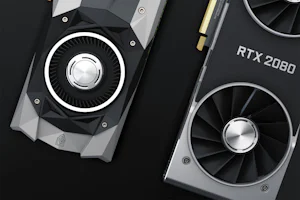
The exchange started with Chollet, the creator of the ARC benchmarks, laying out two ways to read the current moment. In his post, as summarized in industry coverage of the exchange, the market either believes AI infrastructure development has concluded and demand for computing power has peaked — or it should treat the current moment as a rare buying opportunity. Chollet noted that GPU spot prices are still rising, computing capacity remains difficult to obtain, and HBM and DRAM production capacity has effectively been fully pre-booked.
In other words, the physical evidence still points to scarcity, not glut — which is precisely why Chollet called the selloff a buying opportunity for chip stocks, a take amplified across market commentary over the weekend. Musk's reply redirected the debate from demand signals to financing mechanics: even if demand stays strong, someone still has to fund the months between plugging in a data center and billing against it.
The Financing Math Behind the Warning
The warning has arithmetic behind it. Industry capital expenditure on AI infrastructure approached $1 trillion across 2026, by analyst estimates, and the buildout has been financed heavily with debt and vendor financing structures rather than operating cash flow. Data center activations have fallen behind schedule in several markets, and construction delays and rising chip costs push the funding need higher — a combination the Financial Express flagged in its coverage of Musk's remarks.
The memory market illustrates the squeeze Musk is describing. As we reported earlier this month, memory makers say capacity for 2027 is effectively sold out in what analysts have dubbed "RAMageddon," with SK Hynix alone committing $38 billion to expansion. Pre-booked HBM and DRAM supply means AI companies are financing hardware years ahead of the revenue it may enable — the textbook recipe for a working-capital gap.
Meanwhile, the equity markets that were supposed to keep funding the buildout have turned skittish. The Nasdaq's 2026 gains were erased earlier this month as the AI sell-off accelerated, and Anthropic's blockbuster IPO failed to calm the trade — a point Yahoo Finance underscored Sunday in reporting that stocks are "on fire sale" despite the listing. Against that backdrop, Musk's "where will that money come from" is not a rhetorical question; it is the question determining which data center projects actually break ground in 2027. The answer will not be uniform: hyperscalers with fortress balance sheets can self-fund the lag, while smaller neoclouds and national projects depend on credit markets that are repricing weekly.
Skeptics Smell Blood
Not everyone needed Musk's help to reach a bearish conclusion. Critic Gary Marcus, reacting to reports of the warning, wrote that "the jig is almost up" — the latest entry in his long-running argument that AI's spending curve cannot outrun its revenue curve forever. And the commentary accompanying the exchange has been notably bleak: Reuters ran commentary arguing that an AI bust would hurt Chinese stocks far more than GDP, while the Economist asked how much more air can come out of the AI trade.
The honest answer is that nobody knows — including, evidently, the people building the data centers. What Musk's warning adds is a specific, dated mechanism: not a vague bubble, but a 2027 working-capital squeeze created by the lag between capital expenditure and revenue-generating uptime. Whether the industry bridges that gap with equity, debt, delayed projects or a demand shock is now the central question of the AI buildout. Chip suppliers with pre-booked capacity are betting on the first two. Musk, for one, is not so sure.
---
Stay Ahead of AIGet the latest AI news, analysis, and breakthroughs — all in one place.
Read more AI news →