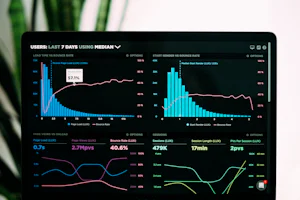
Wall Street's AI trade just had its worst stretch of the year. The Nasdaq collapsed 5.5 percent on Thursday as midterm election results triggered a mass retreat from AI stocks, with CNBC reporting that the Magnificent Seven — Alphabet, Amazon, Apple, Meta, Microsoft, Nvidia, and Tesla — lost roughly $1 trillion in market value in a single session. Across US markets, the selloff erased approximately $2.5 trillion, according to CNN and Seeking Alpha.
The rout did not stay contained for long. By Friday, the panic had spread around the globe: Japan's Nikkei slid around 6 percent into bear-market territory, South Korea's Kospi crashed 9 percent, and European exchanges tumbled as investors questioned whether the two-year AI investment boom had gotten ahead of its economics. For more context on this story, see our ongoing artificial intelligence updates.
What Triggered the Selloff
The proximate cause was political. Tuesday's midterm elections delivered sweeping gains for Democrats, and investors spent Wednesday and Thursday repricing what that means for the AI industry's physical footprint. The most concentrated worry is data center construction: candidates who campaigned against new AI data centers won across the country, and 404 Media's election coverage concluded that "America rejected data centers" in communities where the facilities are actually being built.
Texas was the centerpiece. The state holds roughly 27 percent of all planned US data center gigawatts, according to Wells Fargo, and its governor's race was won by Democrat Gina Hinojosa, who campaigned on halting new data center construction. AI infrastructure stocks had already wobbled in overnight trading when the result became clear — and by Thursday the modest neocloud dips had turned into a full-market rout.
Billionaire Elon Musk, who spent about half a billion dollars on the midterms — including $224 million in Texas, according to 404 Media — acknowledged the shift with a rueful post on X: "Data centers in space looking pretty appealing right now."
Beyond the election math, analysts pointed to deeper anxieties that the results crystallized rather than created. Ramp spending data recently reported by TechCrunch suggested AI spending is stalling even as Anthropic prepares its IPO, and weeks of headlines about circular vendor financing and massive debt-funded data center loans had primed markets for a pullback. The midterms provided the match.
The Fallout: From IPO Timetables to Borrowing Costs
The selloff's casualties extend well past stock portfolios. The most immediate corporate casualty is Anthropic's IPO. Bloomberg, The Wall Street Journal, and Reuters all reported this week that major investors are now skeptical the AI lab can achieve its reported $1.5 trillion valuation target, with Reuters' sources warning the AI backlash could even threaten the IPO's timing. Barron's reported the offering would still go ahead — but analysts now expect a much lower price.
There is also a public-finance dimension. The Los Angeles Times framed the reassessment bluntly: "After tech stock plunge, investors rethink what Anthropic is worth." If the same skepticism spreads to the corporate debt that funds data center construction — a market that has already drawn warnings about billions in loans backed by depreciating GPUs — the cost of AI's physical buildout could rise just as its political welcome mat is being pulled away.
Friday's Rebound: Dip Buyers and a Strong Jobs Report
By Friday, the panic was pausing. Bloomberg reported that US stock futures rose as dip buyers emerged, and the October jobs report blew past estimates, giving buyers a macro reason to return. By early afternoon the Nasdaq had rebounded as chip stocks recovered from their steepest losses, according to Reuters, though the index remained well below where it started the week.
Whether Friday's bounce holds is the question every investor in the AI complex is now asking. Barron's warned readers to "expect more fireworks as markets adjust to the new AI reality" — a sign that even the bulls see the repricing as ongoing rather than finished.
What It Means for the AI Industry
The past three days mark a structural shift in how markets treat AI spending. For two years, the assumption was that any amount of infrastructure investment would be rewarded. The midterm results — and the market's violent reaction to them — established that the political permission for that investment is now conditional, geography by geography, permit by permit.
For AI companies, the implications are immediate. Data center siting decisions, once a question of finding cheap power, now carry electoral risk that boards must price in. For the labs approaching the public markets, the window for trillion-dollar valuations may have narrowed. And for the millions of Americans who use AI tools daily, the industry's buildout — and the pace at which new models and data centers come online — now depends on election outcomes in ways nobody would have predicted a year ago.
The AI trade, in short, has entered its political era. Friday's rebound suggests the market is not abandoning AI. Thursday's 5.5 percent crash suggests it is no longer willing to believe unconditionally.
---
Stay Ahead of AIGet the latest AI news, analysis, and breakthroughs — all in one place.
Read more AI news →