Nscale, the fast-growing British AI data center startup, has appointed Fidji Simo — the former second-in-command at OpenAI — to its board of directors, TechCrunch reported. The appointment comes as the company prepares for an initial public offering anticipated this fall.
Simo joins a board that already includes some of the most recognizable names in tech: former Meta COO Sheryl Sandberg, former Yahoo executive Susan Decker, and former Meta policy chief Nick Clegg. The move was also reported by Bloomberg and The Wall Street Journal, and confirmed by the company in a press release.
Who Fidji Simo Is — and Why Nscale Wants Her
Simo was most recently CEO of AGI deployment at OpenAI, effectively the number two executive at the AI lab. She left the company in July, citing health reasons, and continues to advise OpenAI on a part-time basis, according to TechCrunch.
Her résumé is unusually well matched to Nscale's business of building and operating the physical infrastructure behind large-scale AI products. Before OpenAI, Simo was chair and CEO of Instacart, where she led the grocery delivery company through its 2023 IPO. She spent more than a decade at Meta, eventually running the Facebook app, and currently sits on Shopify's board.
Nscale founder and CEO Josh Payne framed the hire as a deliberate bet on operating experience at planetary scale. Simo, he said, is "one of the few leaders who understand what it means to scale products used by billions of people and the demands those products place on the underlying systems."
"That's what we're building for at Nscale," Payne said in a statement. "Fidji joins a board we've built deliberately, with the experience of scaling platforms to the largest in the world, and the independence, financial rigor and operating depth to which companies at this scale are held."
A Two-Year Sprint Toward the Public Markets
The board addition is the latest step in a remarkable ascent. Nscale was founded just two years ago and has ridden the explosion in demand for AI compute to a reported valuation of $14.6 billion as of March, when Nvidia participated in its funding round, according to CNBC.
In July, the company announced a definitive agreement to acquire Anyscale, the commercial steward of the open-source Ray distributed computing framework, in a deal valued at $1.65 billion — a move reported by Bloomberg that added a software layer to Nscale's data center hardware business.
Now the company is reportedly seeking to raise up to $3.5 billion ahead of its planned IPO, Bloomberg reported last week, citing unnamed sources. A listing this fall would make Nscale one of the most closely watched AI infrastructure debuts of the year.
What Nscale Actually Does
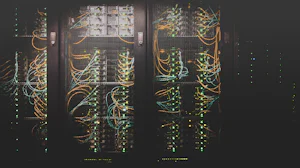
Nscale designs, builds, and operates AI data centers — the specialized facilities that house the GPU clusters used to train and run frontier models. Unlike a traditional cloud provider, the company focuses specifically on the demands of AI workloads: high-density rack configurations, advanced liquid cooling, and access to grid power at a scale conventional data centers were never engineered to supply.
The Anyscale acquisition added a software dimension to that hardware play. Anyscale commercializes Ray, the open-source distributed computing framework widely used to orchestrate AI workloads, which means Nscale can now sell customers a integrated stack — physical capacity plus the software layer that schedules and manages jobs across it. Bundling infrastructure with orchestration software mirrors the playbook of established clouds and gives Nscale a differentiation story beyond square footage and megawatts.
Why the AI Infrastructure Race Keeps Accelerating
Nscale's trajectory is a case study in how quickly capital is pouring into the physical substrate of the AI boom. Training and serving frontier models requires enormous clusters of GPUs, high-density power, and cooling capacity — resources that remain scarce even as model developers race to ship products.
The demand is visible across the industry this week alone: OpenAI paused new $200 ChatGPT Pro sign-ups because Astra demand is straining its systems, and the Pentagon is reportedly considering a $5 billion loan to AI cloud startup Fluidstack. Compute capacity, in other words, is the binding constraint of the 2026 AI economy — and the companies that add it fastest are being rewarded with stratospheric valuations.
A board that combines Sandberg's operational pedigree, Decker's public-company finance experience, Clegg's regulatory fluency, and Simo's track record scaling both consumer products and frontier AI deployments reads like a checklist of what public-market investors look for in a company preparing to endure quarterly scrutiny for the first time.
What Comes Next for Nscale
Neither Nscale nor Simo has commented beyond the announcement, and the company has not disclosed the size of its board or whether further appointments are planned. The key dates to watch are the confidential IPO filing and the final size of the pre-IPO raise, which will determine how much fresh capital Nscale can deploy against its data center pipeline.
For Simo, the move marks a return to the operating arena just two months after her departure from OpenAI — this time on the board of the kind of infrastructure company her former employer, and every other frontier lab, depends on. If the IPO lands as planned, she will hold a front-row seat to the next phase of the AI buildout: the fight over who owns the compute that everything else runs on.
---
Get the latest AI news, analysis, and breakthroughs — all in one place.
Read more AI news →