OpenAI has purchased tens of thousands of Mac mini and Mac Studio desktops in recent months, according to a report from The Information, and the reason has little to do with desktop computing. The machines are being used for reinforcement learning and the training of computer-use agents — AI systems that learn to operate a computer the way a person does, clicking through software, managing files and completing multi-step tasks with limited human intervention.
The report, picked up by MacRumors and 24/7 Wall St., landed the same week Apple announced unusually timed refreshes of both the Mac mini and the Mac Studio. MacRumors reported that the announcement was driven by unexpectedly strong enterprise appetite for AI workloads, and a Hacker News discussion of the news drew hundreds of upvotes as developers debated what the bulk purchases reveal about how frontier labs actually build training infrastructure. For more context on this story, see our ongoing latest AI developments.
Why an AI Lab Wants Desktops Instead of GPU Clusters
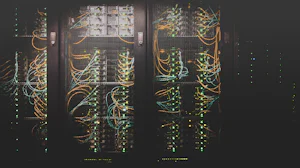
Training a frontier model remains a job for enormous, interconnected GPU clusters — the kind of installations where Nvidia's accelerators dominate and a single training run can involve tens of thousands of linked chips. Agentic AI, however, has a different hardware profile.
An agent that is learning to use a computer can be placed inside a virtual or physical desktop, given a task, scored on the outcome, and refined accordingly. Running thousands of those sessions simultaneously rewards breadth — many independent machines working in parallel — rather than the raw interconnect horsepower that defines frontier-scale pretraining. In that arrangement, a warehouse of consumer desktops starts to look a lot like infrastructure.
That is where Apple's silicon design becomes relevant. Apple's unified memory architecture allows the CPU and GPU to work from the same pool of memory instead of relying on discrete graphics cards with separate system memory. For desktop-automation workloads, where each machine needs to render a full computing environment and respond quickly, that design turns out to be a practical fit.
An Unusually Timed Refresh, Driven by Enterprise Demand
The purchases help explain Apple's odd calendar this week. The company announced new Mac mini and Mac Studio models outside its usual product-event rhythm, and MacRumors reported that the move was driven by unexpectedly strong enterprise demand for AI applications. Apple hardware is not typically described as AI infrastructure — that phrase has belonged to server racks and liquid-cooled GPU pods — but the line between consumer devices and data-center equipment is blurring as agent training scales up.
The timing also intersected with a rough stretch for Apple's public narrative. CNBC's coverage of the company's leadership transition described Apple as entering "the John Ternus era" amid AI challenges and an intensifying memory crunch, a reference to the component shortages that have squeezed the broader electronics industry. Samsung warned in July, as reported by CNBC, that it expects the current chip crunch to last until 2028 — a backdrop that makes any large, sustained hardware buy by an AI lab doubly notable.
Anthropic Has Reportedly Rented Apple Silicon Too
OpenAI is not the only frontier lab experimenting with Apple hardware. According to 24/7 Wall St., Anthropic has reportedly rented Apple silicon capacity through Amazon Web Services for similar workloads. Neither detail changes the fact that Nvidia remains the center of gravity for AI compute, but together they point to a practical conclusion inside the industry: labs are hunting for compute wherever the economics and the workload shape make sense.
For Apple, the effect is a demand tailwind it never planned for. 24/7 Wall St. noted that Mac revenue grew 29% in Apple's most recent quarter and framed the AI-lab bulk orders as an accidental multibillion-dollar revenue surge — growth that arrives without Apple spending billions of dollars on data-center construction of its own.
What It Means for the AI Compute Market
The story matters beyond Apple's income statement for three reasons.
First, it confirms that the next phase of AI competition is agentic. The expensive problem is no longer only training a model to answer questions; it is training systems to complete tasks inside real software environments. That workload class scales with the number of environments you can simulate, which favors distributed fleets of ordinary machines over single monolithic clusters.
Second, it widens the supplier map. Through 2025 and 2026, the AI hardware conversation has been dominated by GPU scarcity, hyperscaler capital expenditure and customs-driven supply scrambles. If thousands of off-the-shelf desktops can carry a meaningful share of agent-training load, the effective supply of AI-capable compute is larger — and more dispersed — than the data-center narrative suggests.
Third, it creates strange dependencies. Frontier labs now have a real stake in the release cadence, pricing and component availability of consumer hardware lines. A memory shortage that raises desktop prices, or a refresh cycle that changes the silicon inside a Mac mini, now ripples directly into AI training plans.
What to Watch Next
Neither OpenAI nor Apple has publicly detailed the scale of the program, so the key numbers — exact machine counts, spend, and how the training results compare with GPU-based alternatives — remain unconfirmed. The questions worth tracking are whether other labs follow with their own desktop fleets, whether Apple leans into the enterprise AI demand with configurations aimed specifically at agent workloads, and whether the unified-memory advantage holds as agents move from controlling one desktop to orchestrating many at once.
For now, the picture is clear enough: the AI buildout has grown a new tier, and it is sitting on desks rather than in data centers. For more on how the industry's infrastructure race is evolving, see our ongoing coverage of AI hardware and the companies building it.
---
Stay Ahead of AIGet the latest AI news, analysis, and breakthroughs — all in one place.
Read more AI news →