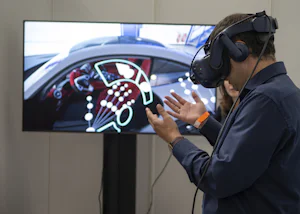
OpenAI is disbanding its stand-alone robotics team, according to a Fortune report picked up by The Decoder on Friday, but this time the move looks less like an exit from robotics and more like a bet that its frontier model can do the job alone. Robotics researchers are being folded into the main research organization under Chief Research Officer Mark Chen, while applied robotics and hardware staff join Greg Brockman's Applied group.
The reorganization reportedly happened on such short notice that OpenAI had already booked a booth at the Conference on Robot Learning (CoRL) in Austin, which then sat empty. Fortune reported the internal rationale: general-purpose models such as GPT-6 Astra can control robots directly, reducing the need for specialized robotics models trained on narrow datasets. For more on this and other latest AI developments, we track the industry around the clock.
Why OpenAI Thinks a General Model Can Drive a Robot
The technical case rests on a string of recent results. In an Nvidia study cited by The Decoder, an agent powered by GPT-6 Astra achieved a 74.8 percent success rate on simulated robotics tasks, compared with 51 percent for the best specialized models — though the tests used a simulated DROID robot rather than physical hardware. We covered Astra's earlier StationeryBench result in September, where it fully completed 7 of 100 tabletop manipulation tasks that a competing specialized model failed entirely.
Yoav Artzi, an AI researcher at Cornell University and Google DeepMind, told The Decoder he views Astra as a major leap in spatial understanding, saying the model reaches near-human accuracy on the still-unpublished REMAP benchmark. Artzi suspects OpenAI trained the model on large amounts of 3D data such as Blender scenes, though how much robotics data actually made it into training remains unclear.
A Short, Messy History With Robots
OpenAI has been here before. The company shut down its robotics division in 2020, and co-founder Wojciech Zaremba later explained the team lacked the training data it needed while large language models looked like a faster path to AGI. The robotics effort was rebuilt in 2024, first through partnerships and hardware investments, and CEO Sam Altman has reportedly targeted a first public robot demonstration for 2027, with an ambition to build OpenAI's own everyday robots over the long term.
The difference this time is structural rather than strategic. Folding researchers into the main research team and the Applied organization keeps robotics work inside the company while removing the separate team that owned it — the same pattern OpenAI followed in November when it disbanded its Preparedness safety team during a broader restructuring, a move that drew criticism from safety researchers.
The Competition Is Not Standing Still
The Decoder notes that Anthropic and Google have also shown recent progress on robotics tasks with their large general-purpose models, so OpenAI's bet is not made in a vacuum. Google DeepMind's Gemini robotics work has been running its own track for over a year, and specialized robotics startups argue that purpose-built models still hold real advantages.
Those advantages are the crux of the debate. Specialized robotics models may still win on cost, reliability, speed and energy consumption even if they generalize less well, The Decoder reported. A frontier model running onboard a robot also raises practical questions about latency and connectivity that a small dedicated policy network does not face. Whether a single general model can absorb those constraints is exactly what the next round of hardware-in-the-loop benchmarks will test.
What It Means for the Industry
If OpenAI's wager pays off, the robotics stack collapses into the same foundation-model economics that reshaped language and coding: one model, many bodies. If it does not, the company will have traded a focused robotics team for research lines that serve many goals at once — a trade some robotics researchers have warned is harder to reverse than it looks.
For now the signals point in one direction. OpenAI walked away from a robotics conference booth, reassigned its robotics researchers and pointed its strongest model at the physical world. The robot demo Altman wants in 2027 now depends less on a robotics division and more on how far Astra-class models can go.
---
Stay Ahead of AIGet the latest AI news, analysis, and breakthroughs — all in one place.
Read more AI news →