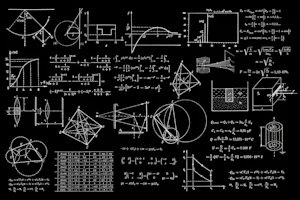
OpenAI has released findings on 377 mathematical research problems, the company said in a blog post titled "Sharing AI progress in mathematics" published on Tuesday, October 6, 2026, in its second major mathematics drop in as many months.
The results span algebra, theoretical computer science, and mathematical logic, and arrive just weeks after OpenAI claimed a solution to the Navier-Stokes equations, one of the world's most famous unsolved problems with a $1 million prize attached. That earlier claim already divided mathematicians; this week's much larger release has sharpened the debate. For readers following breaking AI news, the episode has become the clearest test yet of how the research community should handle machine-generated results that humans cannot easily verify.
What OpenAI Actually Released
According to The Guardian, OpenAI published "over 370 mathematical results across a variety of topics such as algebra, theoretical computer science and mathematical logic." The New York Times put the count at 377 problems, while New Scientist reported that the release included 722 mathematical discoveries once auxiliary results were tallied. The varying counts reflect different ways of grouping lemmas, corollaries, and full solutions into discrete "results."
The scale is what stunned observers. Where last month's Navier-Stokes claim involved a single, closely scrutinized result, this release landed all at once — hundreds of findings across multiple subfields, generated by OpenAI's most advanced internal models. The story drew coverage from The Washington Post, The Economist, The Wall Street Journal, and Fortune within a day, and the OpenAI blog post topped Hacker News with well over a thousand upvotes.
The Institute for Advanced Study Pushes Back
The Institute for Advanced Study in Princeton, New Jersey — the longtime home of figures like Einstein and von Neumann — said it does not endorse the practice of testing frontier models against the field's hardest open problems, particularly when the work happens behind closed doors.
"It is now the case that AI can output mathematical arguments in situations without the human who prompted it being able to understand the arguments, verify them, or take responsibility for them," the organization said in a statement. "We believe that human understanding of mathematics remains of paramount importance."
The concern is not that the results are necessarily wrong. It is that mathematics as a discipline depends on verification, and a flood of machine-generated claims that no human has checked sits uneasily with scholarly norms.
OpenAI's Response: A Seat at the Table
To address the backlash, OpenAI announced it will work with the Institute for Advanced Study to give "mathematicians a voice in how we move forward." What the company did not commit to, The Guardian noted, is any change to the underlying practice: OpenAI gave no indication it will stop testing advanced problems on proprietary internal models.
The Institute's advisory board also asked AI labs to grant "equitable access" to their frontier systems. "The use of proprietary internal models by AI labs to do mathematical research risks creating a two-tier system where labs outrun the rest of the field, effectively alienating the mathematical community from its own discipline," the group wrote.
'Take Someone's Work and Take It to Completion'
Mathematicians close to the affected problems are raising a subtler issue: credit. Tristan Buckmaster, a New York University mathematician who was working on the Navier-Stokes problem, told The New York Times that researchers prompting AI models may be supplying partial progress the models then finish.
"There's likely to be a bunch of results where they take someone's work and then take it to completion," Buckmaster said.
If accurate, that dynamic complicates both attribution and evaluation. A result that looks like an independent machine breakthrough may in fact be the final step on a human-built scaffold — one the human never agreed to hand over.
What It Means for AI Research
The mathematics releases are becoming a recurring showcase for frontier-lab capabilities, and a recurring stress test for how science absorbs machine output. The Wall Street Journal's framing captured the whiplash: AI solved one math problem and everyone freaked out — it has now cracked hundreds more.
Three questions will shape what happens next. First, verification: independent mathematicians will need months to check even a fraction of 377 results, and errors, if found, will land hard on OpenAI's credibility. Second, access: whether labs open their strongest models to outside researchers, as the Institute demands, or keep the loop closed. Third, precedence: as Buckmaster's concern suggests, the field may need new norms for crediting human-AI collaborative proofs.
OpenAI did not respond to requests for comment on the criticism, according to The Guardian. Whether the partnership with the Institute for Advanced Study produces workable norms — or merely documents the disagreement — will likely determine whether mathematics remains the leading benchmark for frontier AI progress, or becomes the first field to formally push back against it.
Stay Ahead of AI Read more AI news on AI Buzz Wire