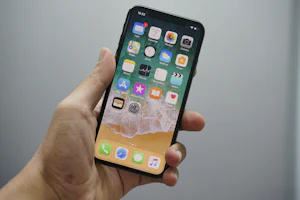

OpenAI has asked a federal judge to throw out antitrust claims brought by Elon Musk's X Corp., arguing that its agreement with Apple to integrate ChatGPT into iPhones does not prevent competing artificial intelligence developers from reaching consumers.
The request, reported on November 4 by legal news service MLex, seeks summary judgment — a ruling that would resolve the case without a trial. OpenAI maintains that no reasonable jury could conclude that the Apple arrangement amounts to an unlawful exclusive agreement, pointing to what it describes as the limited weight of the deal's pricing provisions. For more context on this story, see our ongoing AI trends.
OpenAI's Core Argument
According to MLex, OpenAI told the court that X Corp. and other competitors remain free to negotiate their own commercial arrangements with Apple and to distribute competing AI products through alternative channels, including Apple's App Store. The ChatGPT developer argued that rivals could secure similar opportunities by presenting Apple with commercially attractive proposals.
OpenAI also disputed the premise that a preferred partnership automatically constitutes unlawful exclusivity. In the company's view, the existence of a prominent commercial deal between two companies is not, by itself, evidence that rivals have been substantially shut out of the market.
The filing builds on arguments OpenAI made earlier in the litigation. In a September 22 request for summary judgment, the company cited public statements in which X described its own technological capabilities and competitive advantages in artificial intelligence, contending that those disclosures undercut claims that the Apple arrangement had significantly impaired X's ability to compete.
How the Lawsuit Got Here
X Corp. and Musk's artificial intelligence business initially sued Apple and OpenAI in August 2025, alleging that the ChatGPT partnership unlawfully restricted competition in markets for smartphones and generative AI chatbots. The plaintiffs argued that integrating ChatGPT into Apple's devices gave OpenAI preferential access to iPhone users while placing rival services, including Musk's Grok chatbot, at a competitive disadvantage.
At the center of the case that remains is a single question: whether OpenAI's commercial relationship with Apple effectively prevents competing chatbot developers from securing comparable access to consumers.
Apple and OpenAI have denied engaging in anticompetitive conduct.
The case survived an early attempt to dismiss it. In November 2025, US District Judge Mark Pittman in Fort Worth, Texas, allowed the lawsuit to proceed, while emphasizing that his decision did not determine whether the plaintiffs' allegations were valid, Reuters reported at the time.
The litigation narrowed in September 2026, when Musk's companies withdrew their claims against Apple while continuing their case against OpenAI, according to Reuters. The court filing did not publicly explain the terms of that resolution.
X pushed back on OpenAI's summary judgment bid in an October 21 court filing, arguing that the evidence could support a jury finding that the Apple-OpenAI agreement operated as an exclusionary arrangement. According to MLex, X accused OpenAI of improperly asking the court to resolve disputed factual questions that should be weighed at trial, and contended that the arrangement could violate Sections 1 and 2 of the Sherman Act — the principal US federal statutes governing anticompetitive agreements and monopolization.
Why the Case Matters for the AI Industry
The dispute sits at the intersection of two questions that will shape the next phase of the AI market: who controls consumer distribution, and whether preferential placement deals cross the line from tough competition into exclusion.
Operating-system-level placement has become one of the most valuable prizes in the industry. A default or featured assistant position on hundreds of millions of devices can funnel enormous query volume to a single provider, which is precisely why X's complaint targeted the Apple arrangement rather than ChatGPT's technical capabilities.
The outcome will also matter for how AI companies structure partnerships going forward. If the court accepts OpenAI's argument that rivals are free to make their own pitches to Apple, platform deals will face antitrust scrutiny mainly when they are formally exclusive. If X prevails, companies with preferred placements could face broader exposure — even for arrangements that stop short of contractually barring competitors.
What Comes Next
Summary judgment briefing is now the central battleground. Under US procedure, a court grants summary judgment when the evidence shows no genuine dispute of material fact and the moving party is entitled to judgment as a matter of law — a high bar in a case where both sides have spent a year assembling competing accounts of what the Apple deal does and does not foreclose.
If the court grants OpenAI's motion, the case ends without a trial. If the court denies it, the dispute heads toward a jury, where questions about Apple's deal terms, Grok's App Store treatment and X's own competitive position would be aired in public testimony.
Either way, the ruling will offer one of the first judicial tests of how traditional antitrust doctrine applies to AI distribution deals — a question regulators and platforms far beyond Cupertino and San Francisco are watching closely.
---
Stay Ahead of AIGet the latest AI news, analysis, and breakthroughs — all in one place.
Read more AI news →