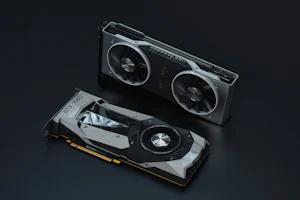
Perplexity has launched Portable Computer, a version of its agentic "Computer" platform that runs entirely on hardware users already own — starting with Nvidia's DGX Spark desktop supercomputer and Linux machines equipped with RTX GPUs. Developed in close partnership with Nvidia and announced August 25, 2026, it is one of the most aggressive attempts yet to move serious AI agent workloads off the cloud and onto local devices.
The pitch is simple but consequential: the model, the user's files, and the work itself can all stay on the machine. Work completed locally consumes no billing credits, every task starts on the device by default, and the system asks permission before sending any individual step to a more powerful frontier model in the cloud. For more context on this story, see our ongoing artificial intelligence updates.
"We've basically brought the exact same UI to a fully local app," said Nate, Perplexity's vice president of engineering for infrastructure and enterprise, during a press briefing Monday. "This incorporates the entirety of the agent harness and inference and everything needed to do work locally."
For Nvidia, which has spent the past two years selling the world on trillion-dollar AI data centers, the announcement carries a subtler message: the chipmaker believes local AI has crossed a threshold from hobbyist curiosity to practical tool. "Local AI reached an inflection point," said Nader, Nvidia's director of developer technology. "For the longest time, it was hobbyists and enthusiasts... running these quantized models quantized down to be super tiny. And while that's cool, it's not super practical. But all that changed with a lot of these new open source models."
A Full Local AI Stack in One App
Perplexity Computer, the cloud product, orchestrates models, files, tools, and web access to complete multi-step knowledge-work tasks — reviewing folders of documents, analyzing data, and producing reports. Portable Computer replicates that locally, bundling the local models, agent harness, inference engine, tools, app connectors, and a security sandbox into a single application. The bundling matters: with most local AI stacks today, users must assemble those pieces themselves — downloading weights, standing up an inference server, and wiring tools together.
In a press demo, the system played a retail investor reviewing a folder of 1099s and investment documents — the kind of sensitive financial material many users would hesitate to upload to a cloud service. Running a 27-billion-parameter Qwen model at full GPU utilization on a DGX Spark, the agent flagged cases where the investor was paying unnecessary fees. The interface element that normally tallies cloud credits, Perplexity noted, "is just parked at zero."
The product is also hybrid rather than hermetic. A second demo analyzed a CSV of user funnel data locally, then pushed the finished analysis to Slack using Perplexity's connector ecosystem. The system connects to Google Drive, Gmail, and GitHub, and can escalate to a frontier cloud model when the local model hits its limits.
Requirements and Availability
At launch, users can run Qwen 3.8 27B or PPLX 27B — a version Perplexity has post-trained on its own harness — with Nvidia's Nemotron 3.5 Lightning coming soon. The system uses vLLM to host inference underneath, with an advanced mode for users who want to plug in their own endpoint. Any RTX GPU with at least 24GB of VRAM, roughly a GeForce RTX 3090 or newer, clears the bar.
Portable Computer is available now for Pro, Max, Enterprise Pro, and Enterprise Max subscribers on Linux, with Windows support following in September.
Co-Designing the Model and the Harness
Alongside the launch, Perplexity published a research paper arguing that effective local agents require the model and the agent harness — the scaffolding of prompts, tools, and orchestration logic — to be designed together. General-purpose harnesses assume frontier models that can absorb enormous contexts and navigate sprawling tool surfaces; small local models buckle under those demands. Perplexity found that although Qwen 3.8 27B advertises a 260,000-token context window, it begins to struggle beyond 100,000 tokens.
The company's answer is a deliberately minimal harness: a succinct system prompt, a small set of core tools, and capabilities that load and unload as on-demand "skills." It converted popular connectors like Gmail and GitHub from token-hungry MCP servers into compact command-line tools, added self-verification hooks, and enforced always-on OS-level sandboxing — if the sandbox is unavailable, the harness disables itself rather than running tools unprotected.
The benchmark results Perplexity reports are striking, though they come from the company's own evaluations. On its internal Local Knowledge Work Bench — 53 tasks spanning deep research, financial analysis, and document creation, which Perplexity plans to open-source — Computer running Qwen 3.8 27B on a DGX Spark scored 82.6%, versus 77.6% for the open-source Pi harness and 74.0% for Hermes running the identical model. Perplexity's post-trained PPLX 27B pushed the score to 85.4%. On BrowseComp, a web research benchmark, Computer hit 66.7% accuracy versus 50.2% for Pi and 43.9% for Hermes, while using 51% less wall time and 70% fewer tokens than Pi.
The Token Economics Driving Agents Local
The strategic logic becomes clear in how AI workloads have changed. Chat was bursty — a question, an answer, done. Agents run for hours. "With agents, you want these agents always on if you can... What we're seeing is an insatiable demand for tokens, and that's something that makes local AI so great," Nader said. "You were not metered by the token. You were not paying for the token."
The hybrid middle ground may be the most commercially interesting result. On Terminal Bench 2.1, a challenging coding benchmark, the fully local Qwen model scored 59.6% at essentially zero marginal cost. Letting it escalate to a Claude Opus 5 "advisor" in the cloud raised the score to 73.0% at an estimated $0.415 per task, while running the frontier model alone scored 82.4% at $0.65 per task. Escalation recovered roughly three-fifths of the gap to frontier performance at about two-thirds of the cost — and the user decides when the trade is worth making. Before any advisor call, the harness runs a PII classifier over the outgoing context and shows the user exactly what would leave the device; the remote model returns text guidance only and never touches local files or tools.
Nvidia also emphasized that the hardware scales beyond a single box: connecting two DGX Sparks over shared memory runs frontier-class open models like DeepSeek's latest, four can run GLM 5.2 or Nemotron Ultra, and Nader said he has "even seen eight Sparks get connected."
The launch extends a partnership that has been building for more than a year, after Nvidia and Perplexity announced a sovereign AI collaboration for European publishers and telecoms in June 2025. For developers weighing a DIY stack of Ollama, open harnesses, and self-hosted inference, Portable Computer's bet is that an appliance-like experience — co-designed model, harness, and sandbox — is what finally makes local agentic AI mainstream.
---
Stay Ahead of AIGet the latest AI news, analysis, and breakthroughs — all in one place.
Read more AI news →