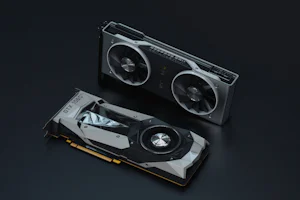
Qualcomm has launched the Cloud AI 100 Ultra, a data center inference accelerator that delivers up to 870 TOPS of INT8 performance and 288 TFLOPS of FP16 compute while drawing just 150 watts — a fraction of the power envelope of the GPUs that currently dominate generative AI inference.
The card, listed on Qualcomm's official data center product page and detailed in launch coverage, is designed specifically for generative AI and large language model workloads. It positions the mobile chip giant as a direct challenger in the inference market, where demand is surging as enterprises deploy AI agents, copilots and retrieval-augmented applications at scale. For more context on the AI hardware race, see our AI news coverage.
The Specs: SRAM First, DRAM Second
At the heart of the Cloud AI 100 Ultra are 64 AI cores and 576 MB of on-die SRAM. Qualcomm's bet is that keeping model weights and activations physically close to the compute units — rather than shuttling every token out to external memory — pays off for transformer-based models, which live and die on memory bandwidth.
The card still carries 128 GB of LPDDR4x memory with 548 GB/s of bandwidth for larger models and longer contexts, connected over PCIe Gen4 with 16 lanes. That combination — large on-die SRAM plus a modest 150W power draw — is the card's differentiator. Nvidia's data center GPUs typically range from 300W to 700W, and every watt matters when inference is billed by the token and data center power is the industry's most contested resource.
"The Cloud AI 100 Ultra is a performance- and cost-optimized AI inference solution," the company said in its product materials, emphasizing programmability across workloads ranging from computer vision to natural language processing.
Software: An OpenAI-Compatible On-Ramp
Hardware has never been Qualcomm's problem in the data center; software has. The company is addressing that with its AI Inference Suite, a software layer that exposes OpenAI-compatible APIs for building chatbots, copilots and AI agents.
The suite supports chat, image generation, multimodal models and retrieval-augmented generation (RAG) workflows, and deploys via Kubernetes or bare-metal containers. Qualcomm also ships user management and administration tools — an unglamorous addition that raw accelerator offerings often lack, but one that enterprise IT teams weigh heavily when they move workloads in-house.
The OpenAI-compatible API surface matters strategically: it lets developers point existing OpenAI-bound pipelines at Qualcomm hardware with a configuration change rather than a rewrite, lowering the switching cost that has protected incumbency in this market.
A Crowded Field With One Clear Leader
Qualcomm enters an inference market that has become the battleground of the AI hardware cycle. Nvidia's L40S and H100 dominate; AMD's MI300X and Intel's Gaudi 3 target the same workloads; and specialized silicon from Groq and Cerebras has carved out niches on raw inference speed.
The demand side explains the scramble. Serving AI agents and RAG pipelines multiplies the number of model calls a single user session generates, and every one of those calls is an inference problem to be solved at the lowest possible cost per token. Hyperscalers buy racks of flagship GPUs to handle it; the enterprises beneath them are looking for hardware that fits in a standard server, on a standard power circuit, without renegotiating their electricity contracts.
Qualcomm's pitch is total cost of ownership rather than peak performance. For enterprises running inference at scale, power consumption flows directly into operating costs, and a card delivering competitive throughput at 150W undercuts the economics of brute-force GPUs. Training remains Nvidia's domain — the Ultra makes no claim on it — but inference is where the industry's unit economics are actually decided, and it is the workload most enterprises will run themselves, whether in an on-premises cluster or a colocation cage.
The software ecosystem remains the uphill battle. Nvidia's CUDA platform is still the default choice for most AI developers, and while OpenAI-compatible APIs lower the barrier to entry, they do not eliminate the rework required for custom inference pipelines.
Where It Fits in Qualcomm's Lineup
The Ultra sits at the top of Qualcomm's inference lineup, which also includes the Cloud AI 80 Ultra (up to 618 TOPS of INT8 with the same 576 MB of SRAM), the Cloud AI 100 Pro, and the Cloud AI 100 Standard, which targets edge and smaller-scale deployments with 75W power envelopes.
The launch represents the current generation of Qualcomm's Dragonfly data center roadmap, which the company has been developing for cloud-scale AI workloads — and which now gives Qualcomm an argument for enterprises that want to run generative AI inference on-premises rather than in the public cloud, whether for cost, latency or data governance reasons.
The Bet, in One Sentence
Qualcomm is wagering that as AI moves from a handful of hyperscalers to thousands of enterprises, the winning inference card is not the fastest one but the most efficient one. The Cloud AI 100 Ultra is that argument in silicon; whether developers follow the watts remains the open question.
---
Stay Ahead of AIGet the latest AI news, analysis, and breakthroughs — all in one place.
Read more AI news →