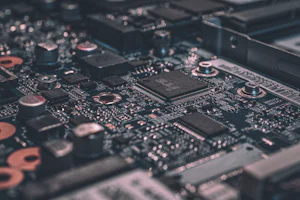
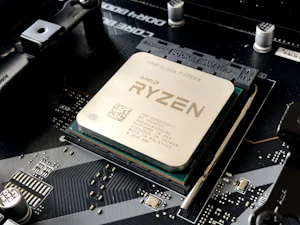
Samsung Electronics has secured a roughly $200 billion agreement to manufacture artificial intelligence chips for Broadcom, a landmark order that dramatically expands the South Korean giant's contract chipmaking business as global demand for AI silicon surges.
Reuters first reported the deal on July 25, 2026, describing it as a partnership that "boosts Samsung's foundry push," with Yahoo Finance, Investing.com, and TradingView confirming the headline figure. The arrangement marks the single largest manufacturing commitment Samsung Foundry has landed, and it lands at a moment when the entire AI hardware supply chain is being reshaped by record spending from cloud providers and chip designers.
For breaking AI news and the companies building tomorrow's computing infrastructure, the deal is significant because it signals that Samsung is finally translating its decades of semiconductor experience into large-scale contract wins against TSMC, the Taiwanese firm that dominates the foundry market.
Why Broadcom, and Why Now
Broadcom is one of the world's most important designers of custom silicon, and its business has been supercharged by the AI boom. The company designs bespoke accelerators — application-specific integrated circuits, or ASICs — for some of the largest technology companies on the planet, including the custom AI chips used inside hyperscale data centers. As cloud giants look for alternatives to Nvidia's expensive, supply-constrained GPUs, Broadcom's custom-silicon franchise has become a central pillar of the AI hardware economy.
To build those chips, Broadcom needs a manufacturing partner. That partner must be capable of producing advanced logic chips at the leading edge of process technology — a capability only a handful of companies in the world possess. Landing Broadcom's business means Samsung will fabricate large volumes of advanced AI accelerators over the life of the agreement, locking in years of factory utilization.
The size of the commitment — reported at roughly $200 billion — reflects both the volume of chips involved and the multi-year horizon of the contract. Headlines across financial outlets referenced the deal extending for years, underlining how AI chip demand is no longer a short-term spike but a sustained, decade-scale buildout.
Samsung's Foundry Catches Up
Samsung Foundry has long operated in the shadow of TSMC, which controls the majority of the world's advanced chip-manufacturing capacity. While Samsung is a powerhouse in memory — it is a leading producer of the high-bandwidth memory (HBM) used inside AI GPUs — its contract logic foundry has struggled to win the marquee customers that define the market.
Securing Broadcom changes that narrative. A deal of this magnitude provides Samsung with the guaranteed volume needed to justify continued investment in next-generation fabrication plants, including its advanced process nodes. It also validates Samsung's technology roadmap to a sophisticated customer that could have chosen TSMC instead. In a market where scale and yield determine who survives, a $200 billion anchor customer is transformative.
The win arrives as Samsung is investing heavily in expanding capacity, including new fabs designed to serve the AI era. Reports have noted Samsung's intensifying rivalry with TSMC and its determination to position itself as a credible second source for advanced logic chips — a strategic priority for customers nervous about over-reliance on a single Taiwanese supplier.
A Reshuffling Silicon Map
The Broadcom agreement is part of a broader reshuffling of the global semiconductor map driven by artificial intelligence. Demand for AI accelerators has pushed contract manufacturers, memory producers, and packaging specialists to their limits, triggering a wave of multi-billion-dollar commitments across the industry.
South Korea's semiconductor ecosystem has been a particular focal point. Samsung and SK Hynix together dominate the market for high-bandwidth memory, the stacked memory chips stacked alongside AI processors, and the country's foundry, packaging, and equipment players are racing to capture more of the AI value chain. Samsung's ability to win logic-manufacturing business from a customer of Broadcom's stature demonstrates that the Korean industry's ambitions extend well beyond memory.
For Broadcom, the partnership secures the production capacity it needs to fulfill its own pipeline of custom-silicon orders from hyperscale customers, insulating the company from the bottlenecks that have plagued AI chip supply since the generative-AI boom began.
Risks and Unknowns
Despite the headline figure, the deal carries familiar risks for contract manufacturing. Advanced-node production is notoriously difficult, and Samsung Foundry has historically faced questions about yields — the share of chips that emerge usable from a production batch — compared with TSMC. Fulfilling a $200 billion commitment requires Samsung to consistently deliver leading-edge performance and reliability at enormous scale.
The agreement's exact terms, including how the headline value is structured over time and which specific process nodes will be used, have not been fully detailed in public reports. Samsung and Broadcom have not independently published granular contract specifications, and the figure reported by Reuters and other outlets should be understood as a long-term commitment rather than a single upfront payment.
Still, even allowing for those caveats, the strategic message is clear: the battle to manufacture the silicon behind artificial intelligence is intensifying, and Samsung has just landed one of the largest contracts in the history of the foundry industry.
Stay Ahead of AI
The scramble to build the chips powering artificial intelligence is reshaping the global economy in real time. For in-depth reporting on AI hardware, semiconductors, and the companies defining the future of computing, follow our AI industry coverage.
Read more AI news →