SK Hynix, the South Korean memory-chip giant that has become one of the most important suppliers in the artificial intelligence supply chain, is seeking to raise an estimated $29 billion through a US listing. The move underscores how the boom in AI hardware is reshaping global capital markets and elevating the companies that feed it.
Multiple major outlets reported the plan on June 24, 2026. Reuters reported that SK Hynix "targets $29 billion US listing as AI demand surges," while the Wall Street Journal, Bloomberg, and Quartz all confirmed the figure. Renaissance Capital, which tracks IPO filings, said the Korea-listed company had filed for an estimated $29 billion US offering. The listing is structured as a Nasdaq depositary receipt (ADR), according to Quartz. For more context on this story, see our ongoing breaking AI news.
Why a Memory Company Is at the Center of the AI Boom
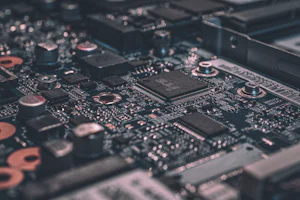
SK Hynix is not a household name like Nvidia, but it sits at a critical chokepoint in the AI economy. The company is a leading manufacturer of high-bandwidth memory (HBM), the stacked DRAM chips that are paired with Nvidia's AI accelerators to feed data into processors at extreme speeds. Without HBM, the most advanced AI GPUs cannot reach their full performance, which has made HBM suppliers indispensable to the entire generative AI build-out.
As AI workloads have grown, so has demand for HBM. SK Hynix has been a primary beneficiary, and its shares have climbed alongside the broader rally in AI-exposed semiconductor stocks. Investing.com reported that SK Hynix shares gained after the company unveiled its $29 billion ADR plan, reflecting investor optimism about the offering.
One of the Largest US Listings in Years
A $29 billion raise would place the SK Hynix listing among the largest in recent memory. Bloomberg reported that the company "seeks $29 billion with US listing to fund AI boom," framing the capital as fuel for further expansion of its manufacturing capacity. The offering arrives in a year that has already seen several blockbuster listings, and it signals that investors remain eager to deploy capital into the AI infrastructure theme.
The decision to list in the United States rather than rely solely on its Seoul listing reflects the depth and liquidity of American capital markets for large technology offerings. A Nasdaq ADR listing gives SK Hynix access to a broader pool of institutional investors and makes it easier for US-based funds to gain direct exposure to the AI memory story.
The Wider AI Semiconductor Race
SK Hynix's move comes as the AI semiconductor landscape grows more crowded and competitive. On the same day, OpenAI unveiled Jalapeño, its first custom inference chip built with Broadcom, in a bid to reduce its dependence on Nvidia's GPUs. Amazon has been selling its own custom AI chips, and Qualcomm has pursued acquisitions to bolster its AI silicon portfolio.
That surge in demand for AI compute is what makes memory suppliers so valuable. Every new accelerator that ships — whether from Nvidia, a custom in-house chip, or a startup — needs high-bandwidth memory to perform, and the companies that can produce it at scale command enormous strategic importance. SK Hynix's US listing is, in effect, a bet that the AI memory boom is nowhere near peaking.
Risks on the Horizon
The offering is not without risk. The semiconductor industry is notoriously cyclical, and some analysts have begun to warn of potential overcapacity if the current wave of AI investment cools. Geopolitics adds another layer of uncertainty: South Korean chipmakers operate in the crossfire of US-China technology restrictions, and shifts in export-control policy could affect demand from key markets.
There are also growing questions about whether the enormous capital flowing into AI infrastructure will generate proportional returns. Several recent analyses have raised the possibility of an AI investment bubble, noting that the spending commitments from major tech companies far outstrip current revenue from AI products. If that gap fails to close, the demand for the chips and memory that underpin the build-out could eventually weaken.
A Defining Moment for AI Hardware Investment
For now, however, the trajectory points sharply upward. SK Hynix's decision to pursue one of the largest US listings in years is a powerful vote of confidence in the durability of AI demand. It also highlights a broader truth about the AI industry: the companies winning the most from the boom are not always the model makers or the app developers, but the hardware suppliers — chip designers and memory manufacturers alike — whose products make the entire stack possible.
As SK Hynix prepares to tap US markets, the offering will be closely watched as a barometer of investor appetite for AI infrastructure. A strong reception would reinforce the thesis that the build-out still has room to run; a weaker one could be an early sign that the market is beginning to question how much more capacity the AI boom truly needs.
---
Stay Ahead of AIGet the latest AI news, analysis, and breakthroughs — all in one place.
Read more AI news →