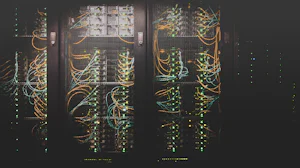
SpaceX is in talks to borrow $40 billion to finance the purchase of Nvidia AI chips, according to reports from the Financial Times and Bloomberg, a debt package that would rank among the largest financings yet tied to the AI build-out. Apollo Global Management is expected to lead the deal, with bond giant Pimco among the lenders in discussions, according to people familiar with the matter who spoke to both outlets.
The Financial Times first reported the negotiations on Tuesday, and Bloomberg confirmed Wednesday that the talks are underway, citing unnamed sources. None of the companies involved has publicly confirmed the plan, and Bloomberg described the discussions as being at an early stage — meaning they could still end without a deal. For more context on this story, see our ongoing AI industry coverage.
What the $40 Billion Package Would Look Like
According to the FT, the financing would combine roughly $10 billion in bank loans with $30 billion in investment-grade debt — bonds sold to investors who view the borrower as a relatively safe bet. Apollo Global Management, the private credit powerhouse, is expected to lead the transaction and sell the debt on to a broad range of institutional investors.
The two reports diverge on timing. The FT's sources indicated the deal should be completed in 2027, while Bloomberg characterized the talks as preliminary and cautioned that terms could still change or collapse entirely.
If completed at the reported size, the package would stand alongside the largest corporate debt raises in recent memory — and it would do so for a company whose core business remains rockets and satellites, not semiconductors.
The structure matters as much as the size. Investment-grade debt — the $30 billion bond portion — is typically reserved for borrowers with stable cash flows and low default risk, a category that has historically included utilities and blue-chip industrials rather than space companies. That lenders are reportedly comfortable extending that label to SpaceX says something about how the market now values its AI rental business: a single customer, Google, is already contracted at $920 million a month.
Why SpaceX Needs $40 Billion of GPUs
The chips would feed SpaceX's rapidly growing AI data center business. In August, Elon Musk said the company would build its AI infrastructure using Nvidia hardware exclusively, and last month he added that the Colossus 2 site could more than double its Nvidia chip count by December.
The strategy is already generating revenue. Google agreed to pay SpaceX $920 million per month for access to roughly 110,000 Nvidia GPUs, according to the FT reporting cited by The Next Web — a rental arrangement that turns Musk's chip fleet into a recurring-revenue machine serving other AI companies.
That rental model is what makes a $40 billion loan conceivable. Rather than betting on rocket launch contracts or Starlink subscriptions, creditors would effectively be underwriting GPU capacity that is already leased out at hyperscale prices — capacity that is scarce enough, given global chip shortages, that tenants are queuing.
That kind of capacity does not come cheap. Nvidia's flagship accelerators are sold out well into the future, and hyperscalers and neoclouds alike are scrambling to secure supply, which is precisely why a company with SpaceX's revenue trajectory can contemplate a $40 billion borrowing on this scale.
Nvidia Is Also Becoming AI's Banker
The reported deal structure fits a broader pattern: Nvidia has been helping its own customers pay for its products. In August, the chipmaker set up financing platforms with Apollo, BlackRock, Blackstone, Brookfield, Goldman Sachs and KKR with the stated goal of raising more than $500 billion for AI infrastructure projects.
Critics have flagged the arrangement as potentially circular — the supplier financing the buyers — while defenders note that project financing at this scale is how railroads, power plants and undersea cables have always been built. Either way, the SpaceX talks suggest the model is expanding from hyperscalers to an entirely new class of borrower.
Investors reacted modestly to the reports. SpaceX shares fell about 1% in after-hours trading on Tuesday, while Nvidia rose roughly 0.5%.
What to Watch Next
Three things will determine whether this deal lands: final commitment from Apollo and the lending group, the interest rate investors demand for SpaceX's AI-linked debt, and whether the companies involved confirm any of the terms. Bloomberg's sources explicitly warned the talks could dissolve, so nothing is certain until bonds are actually priced.
What is already clear is the direction of travel. The AI infrastructure race has entered its debt-financing era, and the amounts being discussed — $40 billion for chips alone — dwarf the valuations of most AI startups. When one of the world's most valuable private companies borrows at this scale purely to buy GPUs, the compute build-out is no longer a story about software. It is a story about capital markets.
---
Stay Ahead of AIGet the latest AI news, analysis, and breakthroughs — all in one place.
Read more AI news →