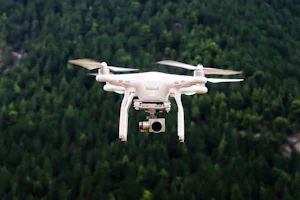
Negotiations on possible rules for lethal autonomous weapons — so-called "killer robots" — are underway at the United Nations in Geneva, at a conference that arms-control advocates describe as the last realistic chance to set boundaries before the technology outpaces diplomacy entirely. The talks are taking place at this week's UN conference on Certain Conventional Weapons (CCW), a forum that only convenes at this level once every five years.
The urgency is not hypothetical. Warfare technology has advanced rapidly in recent years, and some experts now warn the world is just months away from weapons that can choose targets and make the decision to kill without a human in the loop. In Ukraine and Gaza, AI-assisted weapons have already been used to strike targets, with Ukrainian civilians reporting they have been "hunted" by drones while shopping or walking to school. Those systems are still controlled remotely by human operators — but the distance between remote control and full autonomy is shrinking. For readers tracking how fast this field is moving, our AI weapons and ethics coverage follows every development.
Why Campaigners Call This the 'Last Best Chance'
Supporters of controls on autonomous weapons argue that this week's CCW meeting is the final window to agree rules while the technology remains in its semi-autonomous stage. Once weapons that independently select and engage targets are fielded at scale, they contend, negotiating restraint becomes dramatically harder — states will already have integrated the systems into their arsenals and doctrines.
The moral weight behind the talks is unusually broad. Ahead of the meeting, the United Nations, the International Committee of the Red Cross, and the Pope all called for legally binding rules. UN Secretary-General Antonio Guterres warned that allowing fully autonomous weapons to kill would be "crossing a moral red line."
The Humanitarian Case: Responsibility Must Stay Human
Humanitarian organizations argue that the decision to kill — and responsibility for that choice — must remain in human hands. The Red Cross is particularly concerned that existing rules of war, codified in the Geneva Conventions, cannot be reliably respected by autonomous systems. War is chaotic and fast-moving, and the Conventions protect soldiers who are wounded or actively surrendering from being targeted.
"The risk is that, based on the technology we are seeing, they are not able to understand in the same way that a human is the contextual signals," said Georgia Haines, a legal adviser with the Red Cross. "And so the risks are incredibly high that there will be a misidentification of a target."
Human rights groups add an economic dimension to the danger: the technology behind AI-assisted weapons is becoming cheap and easy to use. The wider its adoption by national militaries, the greater the risk of proliferation to terrorist groups or to law enforcement agencies in repressive regimes. In theory, a swarm of autonomous drones could be programmed to attack everyone wearing a particular color of clothing or carrying a specific poster — discrimination at a scale the laws of war were never designed to handle.
A Split Room: 50-Plus States Versus the Big Three
At least 50 countries — including Ireland, Italy, Brazil, Mexico, France, and Germany — are calling for a strict timetable to agree binding rules governing autonomous weapons. Many of the states now meeting in Geneva take the humanitarian concerns seriously and want the process anchored in international law.
But among the states already developing and deploying semi-autonomous weapons, there is firm pushback. The United States, Russia, and Israel have indicated they will oppose legally binding rules. Washington's counterproposal: a five-year timetable to draft non-binding guidelines instead.
The US Position Reflects a Broader Skepticism of Treaties
The American stance is consistent with a long pattern: the US is traditionally a late adopter of international treaties. It never ratified the Ottawa Convention on landmines, although over time it did stop deploying them and reduced its stockpiles. Under President Trump, doubts about international law have grown more explicit — Washington has imposed sweeping sanctions on the International Criminal Court, and this weekend Secretary of State Marco Rubio, in a keynote speech to the Federalist Society, warned against "quoting laws to men with swords."
Consensus Rules and a History of Workarounds
A structural problem hangs over the Geneva talks: UN negotiations on limiting specific weapons are supposed to proceed by consensus. That mechanism produced one landmark agreement — the 1995 ban on blinding lasers — but most other attempts have foundered. With landmines, countries frustrated by the slow UN process eventually took negotiations outside it entirely, producing the Ottawa Convention.
Diplomats are floating a possible compromise for this week: a longer, or even open-ended, negotiating period to develop rules that individual states could then adopt as binding or non-binding. For supporters, that is a way to guarantee at least some progress. For campaigners, it falls well short — one likened the approach to kicking a very dangerous can down the road.
What Happens Next
If the conference ends with an open-ended mandate, the practical effect is that binding limits on autonomous weapons recede further into the future, while deployment timelines keep compressing. Governments, militaries, and defense startups will be watching Geneva closely this week — because whichever way the consensus lands, it will define the legal landscape for autonomous weapons for years to come.
---
Stay Ahead of AIGet the latest AI news, analysis, and breakthroughs — all in one place.
Read more AI news →