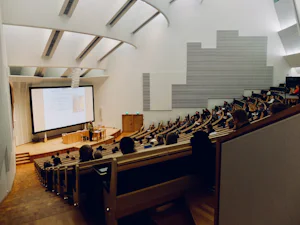
The University of Chicago Law School has banned laptops and phones from first-year classrooms, becoming one of the most prominent institutions in the United States to restrict electronic devices in response to the spread of generative AI. The policy, announced the week of July 7, 2026, is part of what the school calls a sweeping new AI strategy for legal education. For the latest on how AI is reshaping education and beyond, follow AI Buzz Wire.
Reuters first reported the ban on July 9, noting that the restriction applies to all first-year — or "1L" — courses. The University of Chicago Law School confirmed the policy in an official announcement on its website, framing the move as a deliberate return to the Socratic method that has defined legal education for generations.
Socrates Is In, Laptops Are Out
Forbes captured the spirit of the change with the headline: "At The University of Chicago Law School, Socrates Is In, Laptops Are Out." The reference is to the Socratic method, a teaching approach in which professors challenge students through rigorous questioning rather than lecture-based instruction. Proponents argue that the method demands deep engagement, critical thinking, and the ability to reason on the spot — skills that are undermined when students can turn to AI tools for answers.
The ban means that first-year law students at Chicago will no longer be able to take notes on laptops, access digital case materials during class, or consult AI assistants. Instead, they will be expected to participate fully in classroom dialogue using printed materials and handwritten notes.
NBC News, CBS News, and ABC7 Chicago all confirmed the policy. NBC 5 Chicago reported that the ban is aimed at promoting critical thinking, while Fox News framed it as a sign of a growing "AI backlash" reaching major universities.
A Sweeping Strategy Beyond the Ban
LawSites, a publication covering legal technology, reported that the laptop ban is just one element of a broader AI strategy being rolled out at UChicago Law. The strategy reportedly includes new guidelines on when and how AI tools can be used in coursework, training for faculty on detecting AI-generated submissions, and a rethinking of assessment methods to reduce the incentive to rely on AI.
The move reflects growing concern across higher education about the impact of generative AI on learning. As tools like ChatGPT have become ubiquitous, universities have struggled to balance the legitimate educational uses of AI with the risk that students will use it to shortcut the learning process. Law schools face a particular challenge because legal reasoning — the core skill they aim to teach — is precisely the kind of task that AI tools can approximate, making it difficult to distinguish genuine learning from AI-assisted output.
A Broader Trend in Education
The University of Chicago is not alone in rethinking its approach to technology in the classroom. The University of Chicago Law ban follows similar restrictions at other institutions, though UChicago's prominence — it is consistently ranked among the top law schools in the United States — gives the policy outsized significance.
A cross-sectional study published in Cureus in July 2026 found a significant association between dependence on generative AI and reduced critical thinking among medical students, adding empirical weight to concerns that AI may be eroding the cognitive skills that education is meant to develop.
Reuters noted that the Chicago Law decision comes at a time when the legal profession itself is grappling with AI. Courts have encountered AI-generated filings containing fabricated case citations, and bar associations are debating ethical guidelines for AI use in legal practice. By restricting AI in the classroom, UChicago Law is signaling that foundational legal skills must be developed without technological crutches — even as the profession increasingly adopts AI tools for research and drafting.
The Debate Over Device Bans
Not everyone is convinced that banning laptops is the right approach. Critics argue that device bans can disadvantage students who rely on technology for accessibility reasons, and that the solution to AI misuse is better assessment design rather than prohibition. Some educators advocate for "AI-integrated" curricula that teach students to use AI tools critically and ethically, rather than banning them outright.
UChicago Law's approach represents the other end of the spectrum: a deliberate choice to create a technology-free zone where the focus is on unmediated human reasoning. Whether other top law schools will follow suit remains to be seen, but the policy has already generated significant national attention and debate.
What This Means for Legal Education
The University of Chicago Law School's decision is likely to be a bellwether. If the policy succeeds — if students develop stronger analytical skills and classroom engagement improves — other institutions may adopt similar measures. If it creates friction or fails to address the underlying challenges posed by AI, it may serve as a cautionary tale.
Either way, the ban marks a significant moment in the ongoing negotiation between education and artificial intelligence. As AI tools become more powerful and more embedded in professional life, the question of when to embrace them and when to set them aside will only become more pressing.