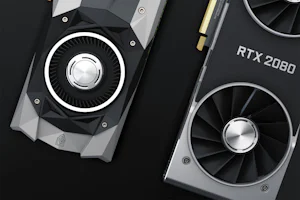
Two of China's leading AI labs have fallen behind schedule on their next flagship models, pressured by a new US rule restricting Chinese companies' access to overseas computing power and by increasingly effective defenses against distillation at OpenAI and Anthropic, Reuters reported on Thursday November 26, citing people familiar with the matter. Z.AI, also known as Zhipu AI, had planned to release GLM-5.5 this month but has yet to do so, while Moonshot AI expects the gap between its major releases could double if it loses access to foreign data centres. For continuing coverage of AI export policy and its effects, follow AI Buzz Wire.
The report is the most detailed account yet of how export controls and anti-distillation measures are affecting Chinese developers in real time, and it comes days after the Financial Times reported that Nvidia had told manufacturing partners to halt server shipments to Malaysia, Singapore, Thailand and Indonesia.
GLM-5.5 Slips Past Its November Target
Z.AI, which is listed in Hong Kong, had planned to release GLM-5.5 in November, two people told Reuters on condition of anonymity. One of them said the model, designed with roughly 3 trillion parameters, has been held up partly by increasingly effective safeguards against distillation, the practice of training a model on answers generated by a more capable one.
The company had hoped to finish training and release the model by the end of the year, but the new US computing restrictions could push the launch into the first quarter of 2027 or later, the same person said. Z.AI did not immediately respond to Reuters' request for comment.
The delay stands in contrast to the company's recent cadence. On Monday November 23, Z.AI released GLM-5.4, which is built on an existing 750-billion-parameter model. The company says a new design allows it to match the performance of models with 2 trillion to 3 trillion parameters, a claim that would be harder to sustain if its largest planned model keeps sliding.
Moonshot's Doubling Release Cycle
Beijing-based Moonshot AI is especially exposed to the new rule because it rents computing power to train its models and prioritizes overseas providers, a person with knowledge of its operations told Reuters. The company internally expects its usual six-month interval between major releases could stretch to 12 months or longer if overseas access is cut off entirely, and computing capacity available inside China could not make up the shortfall, the person said.
The same person estimated that Moonshot's next flagship, Kimi K4, could be delayed until around the middle of 2027. Moonshot released Kimi K2 in July 2025, followed by K2.5 in January and K3 in July, so a slip to mid-2027 would roughly double the time between flagship launches.
Moonshot is already looking for alternatives. A separate person said the company has stepped up efforts to rent computing power in Europe, confirming an earlier CNBC report, and plans to approach Chinese chipmakers about training on their processors. The Information reported last week that Moonshot scrapped a $150 million deal to access Nvidia Blackwell chips through an Indonesian data centre; Moonshot declined to comment to that publication.
Distillation Sources Shifting
Anti-distillation safeguards have also slowed Moonshot, according to Reuters' source. As training data from Anthropic and OpenAI models became harder to obtain, Moonshot began distilling from models developed by Google and Meta, whose latest releases have made them attractive sources, the person said. Google and Meta did not immediately respond to Reuters.
Moonshot has denied relying on distillation. It told China's National Business Daily in July that Kimi K3's gains came from original changes to its underlying architecture. Anthropic, however, said in September that it had observed nearly 200 million exchanges with its Claude models linked to suspected distillation campaigns, which it attributed to Chinese developers including Alibaba, Moonshot and Z.AI. OpenAI has made similar accusations against individuals associated with Moonshot.
On November 20, OpenAI published an account of how it detects and blocks adversarial distillation, saying it had cut attacks that extract its models' hidden reasoning to under 1 percent.
The Decoder, citing reporting by The Information, said DeepSeek researchers had internally estimated that their gap to top US models could grow from three to six months to nine months if distillation disappears completely. The publication also reported that MiniMax, Mihoyo and Alibaba are leaning more heavily on domestic chips and investing more in training data for their own reinforcement learning.
The Rule Behind the Disruption
The Commerce Department rule, in force since November 19, requires licences for overseas computing arrangements above a threshold roughly equal to 750 Nvidia H100 chips, which have needed US export licences for shipment to China since 2022. Operators already providing covered services before the rule took effect have 90 days to obtain licences.
The rule also adds licensing requirements for shipments of advanced chips, including H100s, to Malaysia, Singapore, Indonesia, Thailand and Brazil, with exceptions for qualifying US companies. Reuters said the two measures threaten the ability of Chinese labs to build competitive models at much lower cost, which has helped them keep pace with American rivals despite years of export controls.
A Domestic Fallback
Chinese chipmakers are the fallback Moonshot is weighing. UBS expects Chinese suppliers to take 83 percent of China's AI processor market in 2027 and 88 percent in 2028, according to a research note reported by the South China Morning Post.
Whether domestic processors can fill the gap in time to keep Chinese labs on their previous release cadence is the open question. Reuters' sources suggest that, for at least two of the country's best-known labs, the answer over the next year is no. If the delays hold, GLM-5.5 and Kimi K4 would arrive well after the US models they are intended to challenge, widening a gap that Beijing has spent years and billions of dollars trying to close.
Neither Z.AI nor Moonshot responded to Reuters' requests for comment.
---
Stay Ahead of AIGet the latest AI news, analysis, and breakthroughs — all in one place.
Read more AI news →