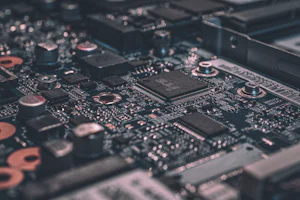
Silicon Valley chip-interconnect startup Eliyan Corp. has closed a $145 million Series C funding round that values the company at $1 billion, pushing it to unicorn status and underscoring how the hardest problems in artificial intelligence are increasingly found not in the models themselves, but in the plumbing that connects the hardware running them.
According to reporting by SiliconANGLE on July 29, 2026, the round was led by Seligman Ventures, with Cisco Ventures and Lumentum also participating. The financing arrives as data center operators build ever-larger clusters of AI accelerators to train and serve large language models, only to find that the connections between those chips cannot keep up. For more context on this story, see our ongoing more AI stories.
The bottleneck between the chips
The problem Eliyan is attacking is straightforward to describe and fiendishly difficult to solve. As companies scale up their AI accelerator clusters to support more powerful models and so-called agentic applications, they run into limits on both bandwidth and power. Existing chip interconnects and power systems simply lack the capacity to feed enormous clusters with enough data and energy to keep them running at full tilt.
The result is performance throttling. Expensive AI accelerators sit idle, waiting for the data they need, while training and inference workloads stall because the surrounding infrastructure cannot deliver bits fast enough. In an industry where every minute of GPU downtime translates to real money, that inefficiency has become a defining constraint on how big AI systems can realistically grow.
Electro-optical interconnects
Eliyan's answer is a new generation of electro-optical interconnects designed to facilitate rapid, high-speed communication across compute, memory, and networking while eliminating the bandwidth constraints that throttle today's clusters. The company's product lineup centers on its NuLink PHYs and NuGear chiplets, which provide connectivity at every level of the hardware stack: die-to-die, chip-to-chip, and rack-to-rack.
Because its chiplets support the full spectrum of AI infrastructure connectivity, data centers can build highly distributed, co-packaged computing fabrics. The payoff, the company argues, is that chips can run at their full compute capacity without a proportional explosion in power consumption, a critical consideration at a time when energy supply has become a gating factor for new AI facilities.
A performance-defining technology
Co-founder and Chief Executive Ramin Farjadrad framed the financing as validation that AI is driving a significant architectural transition across the data center industry. As compute, memory, packaging, and networking become increasingly interconnected, traditional approaches to system connectivity are reaching their limits, he said, adding that Eliyan was founded to address these challenges at the architectural level and that the new capital will accelerate product development, customer adoption, and ecosystem expansion.
Investors echoed that thesis. Umesh Padval, managing partner at Seligman Ventures, praised the startup's technical depth and its portfolio of more than 100 patents. Optical interconnects might not be glamorous, he conceded, but they are becoming a performance-defining technology in AI data centers. Padval argued that Eliyan has developed a differentiated architecture combining deep semiconductor expertise with a scalable approach to the evolving needs of next-generation AI systems.
Why connectivity is the new frontier
The Eliyan round reflects a broader shift in where the AI industry is spending money. For years, attention and capital concentrated on the accelerators themselves, the GPUs and custom silicon that do the heavy mathematical lifting. But as those chips have grown more powerful, the relative cost of moving data between them has climbed sharply, creating an opening for companies that can make the network as fast as the compute.
That dynamic has drawn interest from across the hardware stack. The participation of Cisco Ventures and Lumentum, a maker of optical components, signals that established networking and photonics players see Eliyan's technology as a credible bet on the future of data center architecture. It also positions the startup at the intersection of two converging trends: the relentless scaling of AI compute and the industry's urgent search for energy-efficient ways to keep it fed.
A niche with massive stakes
Eliyan remains a relatively young company, but the scale of the problem it targets gives its unicorn valuation a clear rationale. When individual AI training runs can cost tens of millions of dollars and the largest clusters now span tens of thousands of accelerators, even modest improvements in interconnect efficiency translate into outsized savings. The startup's pitch is that it can deliver exactly those gains by rethinking connectivity from the silicon up.
With $145 million in fresh capital and a growing roster of strategic backers, Eliyan now faces the harder work of turning patented architecture into deployed, production-grade hardware inside the world's largest AI data centers. Whether it can execute on that roadmap will help determine how far the industry can push the next generation of AI systems before the physics of moving data becomes the wall that stops them.
---
Stay Ahead of AIGet the latest AI news, analysis, and breakthroughs — all in one place.
Read more AI news →