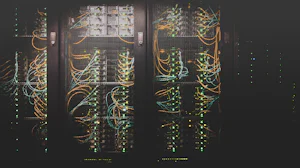
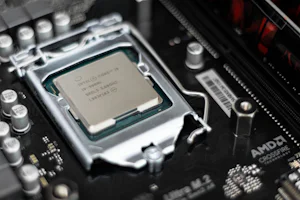
The Federal Communications Commission on Wednesday authorized SpaceX to deploy up to 1 million AI chip-equipped satellites as part of its "Starmind" initiative, making it the first full constellation of orbital data centers to receive the agency's approval. The decision, announced by FCC Chairman Brendan Carr, escalates a race to move compute into orbit that now includes Google and Blue Origin, even as a new NASA-backed analysis warns the physics and economics remain prohibitive at scale. It is the most consequential infrastructure decision yet in the push to take AI data centers beyond Earth's power, land, and cooling constraints.
What the FCC Actually Approved
According to The Verge's Emma Roth, the approval requires SpaceX to deploy at least one satellite by 2033 and to reach the 1 million-satellite milestone by 2040. The agency also approved SpaceX's request to back up its optical network with additional communications links. But it stopped short on one point: the FCC deferred SpaceX's request to dispose of satellites located above 600 kilometers in "graveyard" orbits rather than burning them up in Earth's atmosphere, saying the company had not provided "sufficient information" about its disposal plans.
SpaceX describes Starmind as a way to "capture solar energy in space to power" AI capabilities on Earth, The Verge reported. Data would be transmitted to the ground using high-speed lasers connected to Starlink, and the chips for the satellites would be produced at an upcoming facility SpaceX calls Terafab.
A Kardashev II Sales Pitch From the Regulator
The announcement was anything but a dry regulatory notice. Carr posted a "DATA CENTERS IN SPACE" graphic to X alongside the news release, and Fox Business reported that the FCC's own text invoked the Kardashev scale, the framework proposed in 1964 by Soviet astrophysicist Nikolai Kardashev for measuring a civilization's technological progress by the energy it can harness.
"More fundamentally, it promises to bring the human race closer to a Kardashev II civilization — one that can harness the full power of the sun," the FCC wrote. "America is leading the world into the era of super intelligence," Carr added, saying the action "opens a bold new frontier for the computing infrastructure needed to power America's leadership and growth."
Elon Musk responded on X with "Much appreciated. This will be a great asset to America and the world." Fox Business noted that Musk had teased the idea in an overnight post after the midterm elections, writing "Data centers in space looking pretty appealing right now" as Democratic victories were declared in Texas, where he had invested heavily in friendlier data-center lawmakers.
A Scale Nobody Has Attempted
Only about 17,000 satellites currently orbit Earth, Fox Business reported, and SpaceX's existing Starlink network has just over 11,000 in orbit, despite the company having sought approval for 42,000 before deployment began. Satellite operators routinely request more satellites than they intend to launch to preserve design flexibility, and SpaceX's plan leans heavily on reduced launch costs from Starship, its next-generation reusable rocket still under development.
Amazon's satellite unit Leo and other critics have argued SpaceX is unlikely to deploy the full constellation and that doing so could take centuries. Carr rejected that criticism in March, saying "Amazon should focus on getting Amazon's house in order with their own launches and their own satellite constellation."
Google and Blue Origin Are Already Moving
SpaceX is not alone in orbit. The Verge noted that Google launched its first "Project Suncatcher" AI server satellite last month, and Jeff Bezos' Blue Origin is scheduled to carry out the first dedicated heavy-lift launch for Suncatcher in 2029. Data Center Knowledge reported this week that Google and Blue Origin are planning an orbital AI compute test, underscoring that the FCC's SpaceX approval is the first for a complete constellation rather than a single demonstrator.
The Physics Problem
A new preprint on arXiv by Dr. Slava Turyshev of NASA's Jet Propulsion Laboratory argues that the companies touting orbital data centers are relying on back-of-the-envelope math that breaks down at scale. As Universe Today's Andy Tomaswick reported, Turyshev's analysis finds that a 1-megawatt orbital processing facility, roughly the compute of a small commercial server room, would need about 5,640 square meters of solar panels and roughly 2,500 square meters of radiator panels, bringing total mass to between 34 and 59 metric tons.
Even scaled down to 100-kilowatt units of about 5 metric tons each, keeping pace with projected demand would require launching 170,000 to 461,000 spacecraft over five years. At four per Falcon 9, that is nearly 9,000 launches, or about 33 every week. Launch costs alone, at roughly $3,360 per kilogram on dedicated Falcon 9 flights, run three to thirteen times higher than the combined launch and manufacturing cost per kilogram that orbital compute would need to match terrestrial data centers. Optical links that manage 200 gigabits per second in bursts realistically deliver 13 to 26 gigabits per second continuously, the paper notes, because they require direct line of sight and cannot see through clouds.
Turyshev does see nearer-term niches: space-native processing for Earth-observation satellites and edge computing that piggybacks on existing constellations like Starlink. But his conclusion is that it will be a long time before the technology exists to capitalize on orbital AI at scale.
What Comes Next
For SpaceX, the approval buys time: the first deadline is seven years away, and the full constellation is not due until 2040. For the FCC, the decision signals that Washington intends to treat orbital compute as part of the AI infrastructure race with China rather than a science project. And for skeptics of the AI buildout, the vote is one more sign that the industry's appetite for compute, and the energy to run it, is now being pushed past the planet itself.
---
Stay Ahead of AIGet the latest AI news, analysis, and breakthroughs — all in one place.
Read more AI news →