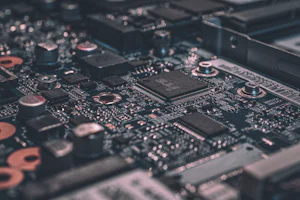
Memory chipmaker Micron Technology has overtaken both Meta and Tesla in market capitalization, capping a dramatic week in which the company disclosed roughly $100 billion in customer deals tied to the artificial intelligence boom. The milestones signal a historic reordering of the semiconductor pecking order behind Nvidia.
According to a Reuters report published June 25, 2026, Micron surpassed Meta and Tesla in market value "amid relentless AI infrastructure demand," a move that crystallized just how central memory has become to the generative AI economy. For more context on this story, see our ongoing breaking AI news.
The shift was powered by a blowout set of quarterly results. Reuters separately reported that Micron topped estimates and touted $22 billion in customer deals for memory chips. By the weekend, Yahoo Finance and Investing.com reported that the company's disclosed backlog of agreements had climbed to around $100 billion — a figure that has become the focal point for Wall Street analysts.
A Profitability Story, Not Just a Revenue Story
What has investors most excited is not only the size of the backlog but the profitability it implies. CNBC reported that Micron has become "tech's new margin king," with a memory crunch pushing the company's margins past those of Nvidia and Meta. MarketWatch framed the moment bluntly: Micron is now on track to be more profitable than any U.S. company except Nvidia and Google.
The driver is high-bandwidth memory (HBM), the specialized memory stacked alongside AI accelerators like Nvidia's GPUs. HBM commands sharply higher prices than conventional memory, and a persistent shortage — which the Wall Street Journal projects could last beyond 2027 — has handed pricing power to the handful of companies able to make it.
'The New Nvidia'
The comparisons to Nvidia have become impossible to ignore. Barron's declared that "Micron is the new Nvidia" and argued the memory maker had "changed the AI game." TechCrunch explored why "Wall Street thinks U.S. memory maker Micron is the next Nvidia," noting that the company's exposure to AI accelerators has made it a proxy for the entire build-out.
The enthusiasm has produced extreme market swings. CNBC reported that Micron shares sank 6 percent at one point, wrapping up "a wild week of trading that saw big swings," even as the broader trajectory remained sharply higher following earnings. The volatility reflects a genuine debate about how durable the boom will prove.
Can the Boom-Bust Cycle Really Be Broken?
The defining feature of the memory industry has always been its brutal boom-bust cycle: prices spike, producers over-expand, and a glut sends profits crashing. The central question now is whether AI has changed that pattern for good.
24/7 Wall St. argued that Micron's $100 billion in locked-in sales means "Wall Street thinks the boom-bust chip cycle is dead." Reuters reported that Micron is explicitly pitching its long-term AI supply agreements as a "cure for memory's boom-bust cycle," using multi-year contracts to smooth out the volatility that has historically defined the sector.
Not everyone is convinced. Morningstar cautioned that "what goes up must come down … eventually," and analysts at several firms have warned that new capacity from rivals SK Hynix and Samsung could eventually ease the shortage. A plunge in those Korean rivals' shares rippled across the sector late in the week, a reminder that supply dynamics can shift quickly.
Why Memory Is the AI Bottleneck
The reason memory has become so pivotal is structural. Modern AI models are enormous, and the speed at which they can run is increasingly limited not by the processor itself but by how fast data can be fed into it. HBM solves that problem by placing memory as close as possible to the compute cores, but it is exceptionally difficult to manufacture.
That scarcity has turned Micron's foundries into some of the most strategically important real estate in the technology industry. The company's agreements span the major AI labs and cloud providers, all of whom are competing to secure multi-year supplies of the chips they need to train and serve models.
A Ripple Effect Across the Industry
The strength at Micron is already lifting adjacent companies. Yahoo Finance and Simply Wall St. reported that Western Digital rallied as Micron's AI deals lifted demand across the broader storage sector. The effects are also being felt downstream at companies like Apple, with analysts warning that surging memory prices are creating fresh cost pressures.
For investors, the question is how much of the optimism is already priced in. Deutsche Bank and Bank of America both raised their Micron price targets after earnings, according to Yahoo Finance and Investing.com, while the Wall Street Journal reported that the chip shortage is projected to last beyond 2027 — a timeline that, if accurate, would underpin the company's backlog for years.
Either way, the week established Micron as the newest titan of the AI hardware era. In a market that has been defined by Nvidia, a second American chipmaker has now staked a claim at the very top — and the memory industry may never be valued the same way again.
---
Stay Ahead of AIGet the latest AI news, analysis, and breakthroughs — all in one place.
Read more AI news →