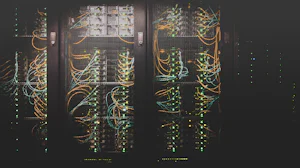
Banned Nvidia Blackwell systems have turned up at a Shanghai data center linked to Alice Huang, the Megaspeed figure at the center of the scandal that briefly cost Jensen Huang his job, according to a Bloomberg investigation published on Friday. Documents that two Chinese companies filed with regulators show a GB300 NVL72 rack pledged as collateral for a loan of roughly $14 million and a GB200 server listed at the same site, hardware that US export rules prohibit shipping to China without a license.
The findings, detailed by Engadget and The Decoder in accounts of Bloomberg's reporting, give the Nvidia scandal a concrete paper trail: loan documents, a serial number and a named facility. US officials added Megaspeed to a trade blacklist earlier this month on suspicion of chip smuggling. For more context on this story, see our ongoing breaking AI news.
What the Filings Show
According to Bloomberg, Shanghai Shuoyao offered a GB300 NVL72 rack as collateral to secure a 96 million yuan loan, about $14 million, from Shanghai Innovation Bank. A second company, Shanghai Kezhan, listed a GB200 server at the same address in its own loan documents. The site is the Yangtze River Delta Project in Shanghai, a facility that Engadget, citing Bloomberg, said may eventually house as many as 800,000 servers.
A single GB300 NVL72 rack houses 72 Blackwell Ultra GPUs and 36 Nvidia Grace CPUs and weighs roughly 3,300 pounds, or about 1.5 tonnes. Exporting the system to China without a US license is banned. As Bloomberg noted, Huang himself once claimed that GB300 racks are too big to smuggle. How the GB300 and GB200 units reached Shanghai remains unclear.
Traced to Gigabyte
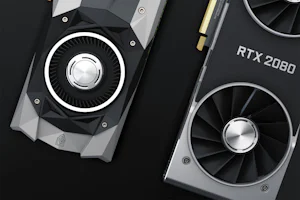
Bloomberg was able to partially reconstruct the lineage of the GB300 rack. By entering its serial number into a public warranty database, the news agency traced the unit to Taiwan's Gigabyte Technology, the company PC gamers know as one of Nvidia's add-in board partners. Like other Nvidia partners, Gigabyte buys GPU chips from the company and uses them to manufacture graphics cards for consumers and servers for enterprise customers.
Gigabyte declined to tell Bloomberg which company or party originally bought the rack. A spokesperson said the company "conducts all business in compliance with applicable laws and regulations" and that "all transactions are subject to our internal compliance requirements and the relevant laws and regulations in effect at the time." Nvidia did not immediately respond to Engadget's request for comment.
The Megaspeed Connection
Shanghai Shuoyao has ties to Megaspeed, the Singapore-based cloud computing company that Alice Huang founded in 2023 and left in August 2025. The Decoder, citing Bloomberg, reported that Nvidia approved Megaspeed as a partner within four days of its founding and that it went on to become Nvidia's largest customer in Southeast Asia.
Earlier this month, Shanghai Shuoyao said it was one of Megaspeed's service providers but described the relationship as "limited to ordinary commercial cooperation," according to Engadget. Bloomberg also found that Megaspeed used renderings of the Yangtze River Delta Project in an investor presentation in 2024 without listing China as the data center's location.
Bloomberg was careful to note the limits of its evidence. The news agency said it does not have proof that Megaspeed directly diverted Nvidia chips to the facility, and the company denies any wrongdoing. The Justice Department is investigating whether Megaspeed broke US export rules.
Deeper Ties to the Facility
Alice Huang appears to have had other connections to the Shanghai project. Bloomberg found Kang Wei listed as the facility's president. The New York Times has reported that Kang was often introduced as Huang's husband and appears to have had ties to China's Ministry of State Security. Bloomberg also found evidence of servers containing Nvidia's earlier Hopper-generation chips inside the Yangtze River Delta Project. Those GPUs are likewise illegal to ship to China without US government permission.
A Delicate Moment for Nvidia
The disclosures land at a precarious point for the chipmaker. Huang resigned on November 12 after acknowledging at least two extramarital affairs, one of them with Alice Huang, whom The New York Times reported US officials had suspected of being a Chinese intelligence asset. The board reinstated him by unanimous vote on November 23, ending an 11-day absence. Treasury Secretary Scott Bessent has publicly blamed the Commerce Department for failing to blacklist Megaspeed sooner, as AI Buzz Wire reported earlier this month.
Huang is scheduled to testify publicly before Congress on December 3 at 10 a.m. ET, Engadget noted. The Bloomberg report ensures that lawmakers will be asking not only about the personal scandal but also about how a 3,300-pound rack of the most closely restricted AI hardware on the market ended up as loan collateral in Shanghai.
Nvidia did not respond to a request for comment, Gigabyte declined to identify the original buyer, and Megaspeed denies wrongdoing, leaving the central question of how the hardware reached the Yangtze River Delta Project unanswered. What the paperwork does establish is that the systems were there, pledged against loans, at a site whose listed president has his own reported connections to both Alice Huang and the Chinese state.
---
Stay Ahead of AIGet the latest AI news, analysis, and breakthroughs — all in one place.
Read more AI news →