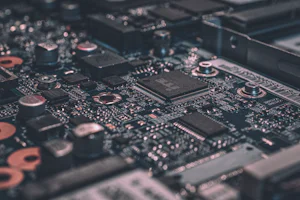
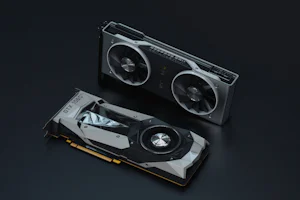
About 600,000 Nvidia H200 artificial intelligence chips are sitting in storage in Hong Kong waiting for shipment to mainland China, Reuters reported on Thursday, citing people familiar with the matter — a stockpile that has built up because Beijing has not approved large-scale imports of the processors despite strong demand from Chinese technology companies.
The report describes an unusual bottleneck in one of the world's most valuable supply chains. The chips have been allowed to leave the United States for Hong Kong, but they cannot cross the border into the mainland in volume because Chinese authorities have withheld approval, leaving warehouse after warehouse of GPUs in limbo just miles from their intended customers. For more context on this story, see our ongoing AI trends.
A Stockpile in Limbo
According to Reuters, China has permitted only limited quantities of the H200 to enter the country in recent months. Several major Chinese internet companies have each received about 10,000 H200 chips over the past few months, the news agency reported — a trickle relative to the demand those companies have publicly signaled.
Three people familiar with the matter told Reuters that small quantities of chips have also been shipped through intermediaries and indirect routes, without specifying how many. Beijing, for its part, has not approved large-volume imports into mainland China, the report said, leaving the official channel effectively frozen while unofficial channels pick up the slack.
The logjam is a reversal of the direction of travel earlier this year, when Washington moved to authorize H200 sales to China and shipments began arriving for major Chinese buyers. At that time, the constraint appeared to be export licensing on the American side. Now, with the chips physically out of the US, the binding constraint is on the Chinese side — approval that has not come.
Why the H200 Still Matters to China
The H200 is not Nvidia's newest AI processor. The company's Blackwell-generation chips are more powerful and fall under stricter US export controls. But the H200 retains capabilities that Chinese domestic alternatives have not matched, according to the Reuters report, particularly when combined with Nvidia's software ecosystem, which remains the de facto standard for training large AI models.
That gap explains the demand. US export controls, in place since 2022, restrict China's access to Nvidia's most advanced chips and to the equipment needed to manufacture competing processors domestically. Chinese firms have responded by buying whatever compliant silicon they can get, and by developing domestic accelerators that still trail Nvidia's offerings for large-scale training.
Gray-Market Prices Have Tripled
With authorized supply constrained, Chinese buyers have turned to intermediaries and indirect routes, and prices in the unofficial market have surged. An eight-card H200 server was offered for more than 6 million yuan — roughly $900,000 — in mainland China by the end of October, about three times its price a year earlier, Reuters reported.
Servers built on Nvidia's newer Blackwell chips, which remain under US export controls, were offered for more than 20 million yuan each on the same gray market, the report said. Those price levels are less a reflection of hardware cost than of scarcity: for a Chinese AI lab, an extra rack of H200s can be the difference between shipping a frontier model this quarter or next year.
Compliant Workarounds and the RTX Pro 5500
While H200 approvals stall, Chinese tech giants have scaled up purchases of a less powerful, export-compliant Nvidia product. According to a report last month cited by Reuters, ByteDance, Alibaba and Tencent together ordered more than 3 million Nvidia RTX Pro 5500 graphics cards — a combined sticker price exceeding $35 billion.
The RTX Pro 5500 cannot substitute for an H200 in frontier model training, but it is useful for inference, smaller models and multimodal workloads, and it sits outside the export-control perimeter. The scale of those orders illustrates both the depth of Chinese demand for Nvidia silicon and the extent to which policy, not supply, now shapes what that demand can buy.
Bad News Landing on a Bad Day
The report landed as Nvidia shares fell more than 7% on Thursday, part of a broad technology selloff that saw the Nasdaq drop more than 5% intraday, according to market data. Yahoo Finance separately reported that Nvidia has lost nearly $1.4 trillion in market value since its October record — context that makes every China data point more consequential for the stock.
China has oscillated between being Nvidia's fastest-growing market and its most geopolitically complicated one. The H200 authorization was supposed to reopen a revenue channel worth billions; instead, per Thursday's reporting, the channel is open on paper and jammed in practice, with 600,000 chips — each of which individually retails for tens of thousands of dollars — cooling their heels in Hong Kong warehouses.
Neither Beijing nor the Chinese companies named in the report have publicly indicated when large-scale approvals might come. Until they do, the world's most sought-after AI hardware will keep piling up on the wrong side of the border.
---
Stay Ahead of AIGet the latest AI news, analysis, and breakthroughs — all in one place.
Read more AI news →