Nvidia's next-generation Kyber NVL144 AI rack system has been delayed by more than a year, pushing its launch into 2028 after the chip giant ran into stubborn manufacturing problems with a critical internal component, according to a report by the research firm SemiAnalysis. The rare stumble for the world's most valuable semiconductor company sent ripples through the AI hardware supply chain and handed an unexpected opening to competitors. For continuous coverage of the AI infrastructure buildout, follow our breaking AI news.
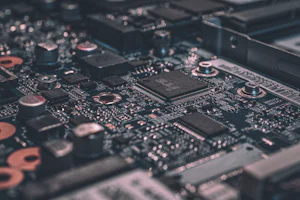
The disclosure, first reported by CNBC on July 6, 2026, cites a SemiAnalysis analysis that found Nvidia is struggling to manufacture the printed circuit board (PCB) midplane that connects the GPUs inside the Kyber rack. The midplane is the physical backbone of the system, routing high-speed signals between dozens of chips, and difficulties producing it at scale have forced Nvidia to push the timeline back by over twelve months.
What the Kyber NVL144 Was Supposed to Deliver
The Kyber NVL144 is part of Nvidia's ambitious roadmap to pack ever more computing power into single, factory-scale racks that hyperscale cloud providers can deploy to train and run frontier AI models. Each NVL144 system is designed to house 144 GPUs in a unified, liquid-cooled chassis, using high-bandwidth interconnects to let the chips work as a single giant accelerator.
These rack-scale systems have become the central building block of the modern AI data center. Companies like Microsoft, Meta, Amazon, and Google order them by the thousands to keep pace with the exploding computational demands of large language models. A delay of more than a year in a flagship product therefore has consequences far beyond Nvidia's own revenue, slowing the capacity expansions that the entire AI industry depends on.
The PCB Midplane Bottleneck
According to SemiAnalysis, the core problem lies in fabricating the PCB midplane to the tolerances that Kyber's high-speed interconnects require. The midplane must carry enormous volumes of data between GPUs with minimal signal loss, and at the densities Nvidia is targeting, even small manufacturing defects can degrade performance or cause failures.
The report indicates that the difficulties are not isolated to a single supplier but reflect a broader challenge in pushing PCB technology to its physical limits. As signal speeds climb and layer counts increase, yields drop and production cycles lengthen, creating a bottleneck that money alone has so far been unable to solve.
A Second Front: CPO and the NVL576
The SemiAnalysis findings extend beyond the NVL144. The larger Kyber NVL576 configuration, which would stack even more GPUs into a single rack, also faces uncertainty because of challenges in mass-producing co-packaged optics (CPO), the technology Nvidia is betting on to replace copper interconnects at scale. Both the PCB midplane and CPO are widely regarded as core pillars of Nvidia's performance advantage, and the fact that both are now proving difficult to manufacture turns what had been a competitive moat into a source of delay.
News of the delays triggered a sharp decline in shares of companies tied to optoelectronics and advanced packaging, as investors reassessed how quickly the next wave of AI hardware would actually arrive.
Rivals See an Opening
For Nvidia's competitors, the delay is a rare gift. Advanced Micro Devices has been steadily closing the gap in GPU performance and has its own rack-scale offerings in development. Google, which designs its own custom AI accelerators called Tensor Processing Units (TPUs), builds integrated systems in-house and is less exposed to the manufacturing bottlenecks now constraining Nvidia's roadmap.
Analysts noted that a twelve-month slip gives AMD additional time to land design wins with hyperscalers who might otherwise have waited for Kyber. It also reinforces the strategic logic behind the wave of custom silicon investment from cloud providers, who have grown wary of depending on a single supplier whose most advanced products keep slipping.
Nvidia has not publicly disputed the SemiAnalysis characterization. The company has previously emphasized that ramping entirely new rack architectures is an inherently complex process and that it prioritizes reliability over speed when customers are investing billions of dollars per deployment.
Implications for the AI Compute Race
The Kyber delay underscores a reality that is easy to forget amid record earnings and soaring demand: the AI revolution still runs on physical hardware, and that hardware is becoming extraordinarily difficult to engineer and manufacture. As models grow larger and the interconnects that link their training clusters grow faster, the tolerance for error in everything from PCB design to optical packaging shrinks to near zero.
For the cloud providers and AI labs counting on a steady pipeline of ever more powerful racks, the message from SemiAnalysis is that the cadence of hardware improvement may be less predictable than the software roadmaps suggest. How Nvidia and its suppliers resolve the midplane and CPO challenges will help determine how quickly the next generation of AI systems arrives, and which companies are positioned to benefit when it does.
---
Stay Ahead of AI
The AI hardware landscape is shifting fast. AI Buzz Wire brings you the latest developments in chips, data centers, and the companies racing to build the infrastructure behind artificial intelligence.
Read more AI news →