SpaceX's first quarterly report as a public company showed revenue nearly doubling to roughly $7.8 billion, as surging demand for AI computing power and continued Starlink growth transformed the rocket maker into one of the largest infrastructure providers in the artificial intelligence boom. The results put Elon Musk's sprawling AI spending directly under Wall Street's microscope — a story followed closely in latest AI business developments.
According to Reuters, SpaceX's revenue jumped in its debut results as both its satellite internet business and its newer AI compute operation expanded rapidly. TechCrunch attributed the surge to AI compute deals with Anthropic and Google alongside sustained Starlink growth, while the company continued to burn more cash than it generated as it plowed capital into GPUs and data centers.
AI Compute Becomes a Core Revenue Line
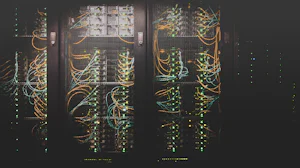
The earnings reveal how decisively SpaceX has pivoted from pure aerospace into AI infrastructure. The company's Colossus data center — a cluster of more than 220,000 Nvidia GPUs drawing over 300 megawatts — has become a magnet for frontier AI labs desperate for capacity.
The financial scale of those arrangements is now visible in the filings. Reuters reported that Anthropic agreed to pay SpaceX roughly $1.25 billion per month for computing power, an extraordinary figure that reflects how acute the shortage of AI training and inference capacity has become. Separately, according to an SEC filing cited by The Decoder, SpaceX is leasing AI computing capacity to Google for about $920 million per month, giving Google access to approximately 110,000 Nvidia chips to serve its Gemini Enterprise platform.
That one of the world's largest cloud providers needs to rent capacity externally, rather than build it, illustrates how tightly the biggest technology companies' businesses are now intertwined — and how a rocket company founded to reach Mars has become an indispensable node in the AI supply chain.
Starlink Keeps Growing
Alongside compute, Starlink remained a powerful engine of growth. The satellite internet service has scaled rapidly, adding subscribers and enterprise contracts, and its expanding constellation underpins much of the confidence investors have placed in SpaceX's public market debut.
The combination — a maturing satellite internet business plus a fast-rising AI infrastructure arm — explains why revenue nearly doubled year over year even as costs climbed sharply.
The Catch: Cash Burn and Capital Intensity
The flip side of the boom is expense. Reports noted that SpaceX continued to spend more cash than it generated, as it raced to buy Nvidia GPUs, expand data center capacity, and keep pace with commitments to Anthropic, Google, and its own xAI unit. The capital required to stand up hundreds of thousands of accelerators, along with the power and cooling to run them, is immense.
Analysts framed the quarter as a test of whether AI-driven revenue can eventually outpace the enormous buildout costs. For now, growth is arriving faster than profitability — a dynamic that has become familiar across the AI sector, from cloud providers to model developers.
A Circular Web of AI Deals
The earnings also surfaced what Bloomberg's Breakingviews column described as a growing "circular" trade in AI. Anthropic, backed by Google, pays SpaceX for compute; SpaceX in turn leases capacity to Google; and the capital flowing through these arrangements increasingly blurs the line between customer, supplier, and investor. Regulators and investors are watching whether these interlocking deals create sustainable economics or simply rotate the same dollars through a tightly connected group of companies.
Investor Scrutiny on a Newly Public Giant
The quarter was SpaceX's first reported result as a public company, and it landed amid intense Wall Street attention on Musk's AI ambitions. Reuters described the results as putting that spending under the microscope, as investors weighed whether the company's revenue growth could eventually justify the scale of its capital outlays.
The pressure is sharpened by SpaceX's ties to xAI, Musk's separately run AI lab, which has posted large losses as it races to compete with Anthropic and OpenAI. As SpaceX absorbs enormous compute costs to serve outside customers and its own affiliated ventures, shareholders are scrutinizing how much of the buildout will translate into durable, profitable revenue rather than capacity bought to feed a money-losing model business.
A Market Defined by GPU Scarcity
The backdrop to SpaceX's surge is a global shortage of AI accelerators. With Nvidia's most advanced chips allocated months or years in advance, access to large, operational GPU clusters has become one of the most valuable assets in technology. SpaceX's ability to stand up and run the Colossus cluster gave it something frontier labs could not easily obtain elsewhere — and the pricing power reflected in its reported compute deals is a direct consequence.
What It Means for the AI Infrastructure Race
SpaceX's debut results underscore a broader shift: the companies winning the AI race are increasingly those that can marshal compute at unprecedented scale. With demand for Nvidia GPUs far outstripping supply, control of large GPU clusters has become a source of strategic leverage — and a competitive moat.
For AI labs like Anthropic and Google, securing guaranteed access to hundreds of thousands of accelerators, even at multi-billion-dollar monthly rates, is now treated as an existential necessity rather than a discretionary expense. SpaceX's ability to deliver that capacity is what turned a single quarter into a watershed moment for the AI infrastructure market.
The company's next test will be whether it can convert revenue growth into sustained cash generation — or whether the cost of feeding Musk's AI ambitions will keep weighing on the balance sheet even as the top line soars.