Some of Nvidia's biggest customers are being warned to expect server price increases of more than 15 percent, as soaring memory chip costs push up the price of artificial intelligence systems built around the company's processors, Bloomberg News reported on Saturday, citing people familiar with the matter.
The higher prices are expected to apply to systems shipped early next year, including servers equipped with Nvidia's flagship Vera Rubin and Grace Blackwell chips, according to the report. The size of the increase will vary depending on the Nvidia chip generation and the memory configuration of each system. For more context on this story, see our ongoing AI news.
Why AI Servers Are Getting More Expensive
The price hikes are being driven not by Nvidia's processors alone but by the memory that accompanies them. Server manufacturers that build systems under contract for major data center operators such as Microsoft, Google and Oracle have recently notified their customers of the upcoming increases, Bloomberg reported, citing sources who asked not to be identified because the communications have not yet been made public.
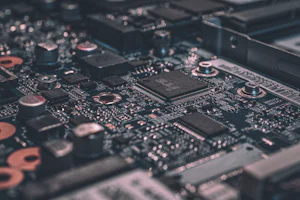
At the center of the squeeze are memory chipmakers Samsung Electronics, SK Hynix and Micron Technology. The three companies account for most of the world's DRAM production, and they have gained unprecedented bargaining leverage amid a surge in demand for AI infrastructure. The effectiveness of Nvidia's AI accelerators depends heavily on how much high-bandwidth DRAM they are paired with, making memory a critical and increasingly costly component of every AI server.
The development marks a shift in the AI hardware supply chain narrative. For most of the past two years, attention has focused on Nvidia's GPUs and the capacity of contract manufacturer TSMC to produce them. Now, memory has become the binding constraint, and the companies that control DRAM supply are capturing more of the economics of the AI build-out.
A Broader Wave of Price Increases
Nvidia is not the only company passing higher component costs downstream. Apple and Qualcomm have both recently said they were forced to raise prices because of chip shortages, and Nvidia has also raised prices on its gaming-oriented PC graphics cards, Bloomberg noted, citing industry news site Tom's Hardware.
Nvidia retains considerable pricing power of its own. The company operates at a gross margin of roughly 75 percent, according to the report, and can charge tens of thousands of dollars per chip because supply from TSMC still cannot meet runaway demand for its accelerators.
The increases arrive at a delicate moment for the industry's massive data center expansion plans. Bloomberg noted that project delays, labor shortages, tightening capital markets and community resistance to new developments have already complicated build-out schedules across the sector. Higher server prices add a further layer of cost pressure to projects measured in the tens of billions of dollars.
Hyperscalers Still Dependent on Nvidia
Major technology companies including Amazon, Microsoft, Google and Meta are all pursuing their own in-house chip programs in an effort to reduce their dependence on Nvidia. But according to the report, they remain heavily reliant on Nvidia purchases for their current data center build-outs, and their ability to gain greater independence will also hinge on access to memory supply from Samsung, SK Hynix and Micron.
That last point underscores how the memory shortage reshapes competitive dynamics across the stack. Even a hyperscaler that designs its own AI chip still needs high-bandwidth memory to make it competitive, and the same three suppliers control that market. In effect, memory has become a chokepoint that no AI aspirant can design around.
For Nvidia, the situation is double-edged. The company benefits from demand that continues to outrun supply, and its margins suggest little pressure to absorb the memory cost increases itself. But steeper server prices could eventually temper orders, particularly among second-tier cloud providers and enterprises with less financial headroom than the largest hyperscalers.
What It Means for the AI Build-Out
The 15 percent figure is an average across configurations, and the impact will vary widely. Systems with the largest memory footprints — precisely the ones most valued for large-model training and high-throughput inference — are likely to see the sharpest increases when shipments begin early next year.
Investors have spent months debating whether the AI infrastructure cycle can sustain its pace. Rising memory costs, component shortages and now measurable server price inflation suggest the next phase of the build-out will be more expensive than the last, even as chipmakers ramp production. For companies budgeting AI capacity in 2027, the message from suppliers is now clear: the same dollar buys less compute than it did a year ago.
The report also puts fresh attention on the memory makers themselves. Samsung, SK Hynix and Micron have become among the most consequential suppliers in the AI economy, and their pricing decisions now ripple directly into the cost of training and running the world's largest AI models.
---
Stay Ahead of AIGet the latest AI news, analysis, and breakthroughs — all in one place.
Read more AI news →