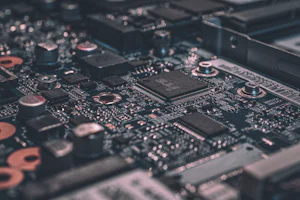
Chinese artificial intelligence startup DeepSeek is developing its own AI chip, according to three people familiar with the matter, a move that could reduce the company's heavy reliance on Nvidia and Huawei processors and mark a significant step in China's push for semiconductor self-sufficiency.
The Reuters exclusive, published on July 7, reported that DeepSeek — whose open-weight models have made it one of the most influential AI labs in the world — is designing a chip tailored for inference, the phase of AI computing in which a trained model generates responses for users, rather than for the training of new models.
이 보고서는 즉시 금융시장에 파문을 일으켰습니다. Nvidia's shares slipped after the news broke, with Investing.com noting the stock's decline "after report says DeepSeek is designing its own AI chip." For a company that has built its dominance on being the indispensable supplier of AI silicon, the prospect of a major Chinese AI lab going its own way is an uncomfortable signal.
훈련이 아닌 추론을 위해 구축됨
구별이 중요합니다. 최첨단 AI 모델을 훈련하려면 가장 강력하고 값비싼 가속기가 필요합니다. 이는 Nvidia가 효과적으로 소유하고 있는 시장입니다. Inference, by contrast, is the everyday work of serving millions of users, and it is where the bulk of computing cost and volume actually accumulates as AI products scale.
Reuters에 따르면 DeepSeek은 Nvidia와 Huawei 칩을 사용하여 전 세계적으로 인기 있는 모델을 훈련하고 운영했습니다. A custom inference chip would not free it from Nvidia entirely, but it would reduce the volume of high-end GPUs the startup needs to purchase for serving its models — potentially trimming costs and loosening the grip of US export controls that have restricted China's access to the most advanced Nvidia hardware.
소식통은 로이터 통신에 이러한 노력이 아직 개발 중이며 사람들은 회사의 계획이 바뀔 수 있다고 경고했다고 말했습니다. DeepSeek은 프로젝트에 대해 공개적으로 논평하지 않았습니다.
중국의 광범위한 추진의 일부
DeepSeek의 칩 야망은 단독으로 존재하지 않습니다. They fit a pattern in which Chinese technology firms, squeezed by successive rounds of US export restrictions, are racing to build domestic alternatives to foreign semiconductors. ABC News reported that Nvidia's AI chip sales in China have stalled as local chipmakers like Huawei take the lead, a shift that has accelerated since Washington tightened controls on advanced chip sales to the country.
DeepSeek의 전략적 논리는 간단합니다. As one of China's most prominent AI labs, controlling more of its own compute stack would insulate it from supply shocks and geopolitical uncertainty while potentially lowering the cost of running its widely used models at scale. Other Chinese firms have pursued similar strategies, with Huawei's Ascend line and a growing crop of startups working to fill the gap left by restricted Nvidia products.
Nvidia의 경우 중국의 국내 칩 개발 노력이 심화되는 것은 한때 전속 시장이었던 곳에서 장기적인 경쟁 위협을 의미합니다. 자체 실리콘을 설계하는 각 중국 AI 연구소는 결코 돌아올 수 없는 고객입니다.
글로벌 칩 환경에 대한 신호
이 보고서는 글로벌 AI 칩 시장이 지정학적 노선에 따라 세분화되고 있는 순간에 나왔습니다. US firms still lead in the most advanced training hardware, but the inference layer — where the sheer volume of AI usage plays out — is becoming a contested battleground. A DeepSeek-designed chip, if it reaches production, would be a notable data point in that contest, demonstrating that a leading model developer is willing to shoulder the enormous cost and complexity of custom silicon to secure its supply chain.
또한 중국 연구소가 설계와 제조 간의 격차를 얼마나 빨리 줄일 수 있는지에 대한 의문도 제기됩니다. 경쟁력 있는 AI 칩을 설계하는 것은 충분히 어렵습니다. 고급 파운드리 접근에 대한 제약을 고려할 때 대규모로 제작하는 것은 완전히 또 다른 과제입니다.
그럼에도 여행의 방향은 분명하다. As export controls harden and the stakes of AI compute rise, more companies are concluding that dependence on a single foreign supplier is a vulnerability they cannot afford. DeepSeek이 보고한 움직임은 이러한 변화의 가장 최근의 징후이자 가장 중요한 징후 중 하나입니다.
이는 반도체와 AI 산업에 큰 영향을 미치는 전개 중인 이야기입니다. For the latest AI industry coverage and continuous reporting on the chip sector, AI Buzz Wire is tracking every angle.
AI보다 앞서 나가세요
Custom silicon is becoming the next frontier of competition in artificial intelligence, and the moves by labs like DeepSeek will reshape the global chip market for years. AI보다 앞서 나가세요 모든 주요 개발에 대한 정보를 적시에 보도합니다.
AI 뉴스 자세히 보기 →