Anthropic, the company behind the Claude family of AI models, is no longer keeping its systems confined to software. According to a Reuters exclusive published Friday, the company has quietly opened a wet-lab facility in the San Francisco Bay Area where robots — directed by Claude — carry out physical biology experiments.
The lab is one of the most concrete steps any frontier AI company has taken into hands-on scientific research. It also lands at an awkward moment for the safety-focused lab, which has spent recent weeks warning about catastrophic AI risks and urging a slower pace of frontier development. Подробнее об этой истории — в нашем последние разработки в ИИ.
Why a Wet Lab Matters
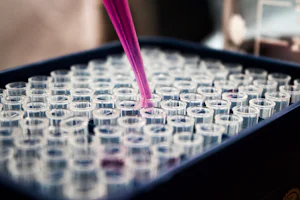
A wet lab is a facility built for experiments involving biological material — cells, proteins and chemicals — as opposed to the dry, computational work of analyzing data. For AI companies, the distinction matters: a model can propose a molecule in seconds, but verifying that it works requires physically synthesizing it and running assays. Anthropic now has its own space for that second half of the equation.
Robots in the Loop
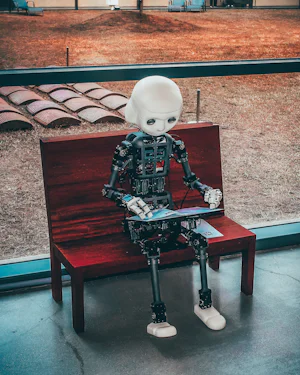
The Bay Area facility will use laboratory robots to automate scientific tasks, with Anthropic's Claude models powering the workflows, Reuters reported. A company spokesperson told the news agency that the lab is "not for drug discovery specifically" — an indication that the facility will support research across multiple subfields of biology rather than a single therapeutic mission.
The facility builds on a push that began in June, when Anthropic launched an effort to develop drugs for diseases that the pharmaceutical sector is not prioritizing. Anthropic told Reuters it is not "competing with pharma and biotech companies" and plans to entrust some lab work to external partners. That division of labor suggests the company may license its discoveries rather than bring drugs to market itself — a sensible posture given that developing a new drug typically takes more than a decade and billions of dollars.
Why Claude's Bench Skills Matter
Anthropic has been unusually transparent about testing its models' biological capabilities before release. Ahead of Claude Mythos 5.1's launch earlier this month, the company evaluated the model's ability to develop high-affinity binders — molecules that attach to disease-related proteins, a prerequisite step in disabling them.
According to Anthropic, the model generated 12 candidate molecules during the test, and the molecules' hit rate — a measure of therapeutic potential — came in at 50%. Typical protein design projects achieve hit rates of 10% to 15%, making the result a substantial outlier if it holds up outside of benchmark conditions.
The new lab gives Anthropic a place to run exactly that kind of end-to-end validation: hypotheses proposed by Claude, then physically tested, iterated and confirmed by Claude-directed equipment.
The Model Hardware Standard
The connective tissue between Claude and the physical lab is a protocol called the Model Hardware Standard, or MHS. It enables Claude to control lab equipment directly — and, according to Anthropic, to spot experiment errors, fix them, and write hardware automation scripts on its own.
The problem MHS solves is coordination. Mapping out a new biological phenomenon often requires analyzing it with several different lab instruments, and those machines must carry out their work in a specific order. Researchers normally hand-write scripts to coordinate which instrument does what, and when. Anthropic says MHS reduces that task to something Claude can perform reliably.
The protocol was developed in partnership with HHMI, a Virginia-based medical research center. In August, Anthropic stated that HHMI is one of several organizations testing MHS-powered Claude workflows for controlling lab equipment — a trial program that now appears to have been a dress rehearsal for the company's own facility.
An Awkward Optics Problem
The announcement arrives days after Anthropic's chief executive, Dario Amodei, publicly urged the AI industry to pace frontier development, and amid the company's own periodic warnings that advanced AI could eventually lower barriers to biological weapons. Critics were quick to note the tension. Gizmodo's headline captured it bluntly: "While Issuing Warnings About AI-Made Bioweapons, Anthropic Quietly Set Up an AI-Run, Robot-Operated Biology Lab Here in the US."
Позиция Anthropic, переданная агентству Reuters, заключается в том, что лаборатория является исследовательским инструментом под контролем человека, а не попыткой сквозной автоматизации разработки лекарств. Присутствие компании в области медико-биологических наук также быстро расширяется и на других фронтах: на прошлой неделе она представила Программу проверки медико-биологических наук, которая корректирует меры безопасности, связанные с биологией, для проверенных научных пользователей.
Что это значит для отрасли
Для индустрии ИИ в целом эта лаборатория является сигналом о том, что передовые компании рассматривают экспериментальную, воплощенную науку как следующую арену для возможностей моделирования — не просто кодирование, написание или анализ, но и более быстрое физическое применение научного метода.
Для Anthropic можно сделать ставку на то, что ценность Клода в биологии заключается в замыкании цикла между выдвижением гипотез и их проверкой. Оправдается ли эта ставка в обнаруженных молекулах — и можно ли ее согласовать с собственными предупреждениями компании о безопасности — станет одним из наиболее внимательно наблюдаемых экспериментов в области ИИ в наступающем году.
---
Будьте в курсе ИИПоследние новости, аналитика и прорывы в сфере ИИ — всё в одном месте.
Читать больше новостей об ИИ →