Elon Musk's SpaceX and Tesla have confirmed an initial investment of $16.8 billion to build the Terafab semiconductor plant in Grimes County, Texas, near College Station. The announcement was confirmed by Musk and Texas Governor Greg Abbott on August 6, 2026, according to reporting from the Houston Chronicle and Reuters.
The massive project is the latest sign that latest AI developments are driving an unprecedented wave of domestic semiconductor investment, as the largest technology companies race to secure their own supply of advanced chips for artificial intelligence workloads.
What Is Terafab?
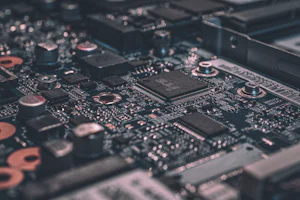
Terafab — short for a tera-scale fabrication facility — is designed as an all-in-one advanced chip foundry that integrates logic manufacturing, memory production, and advanced packaging on a single campus. Tom's Hardware, which reported on drone flyover footage in early August showing rapid construction progress, described the site as an Advanced Technology Chip Foundry (ATCF) preparing for unified logic, memory, and packaging operations.
By combining these traditionally separate manufacturing stages under one roof, Terafab aims to shorten supply chains and reduce the cost of producing the custom silicon that powers AI training and inference. The approach mirrors a broader industry shift toward vertical integration, where companies design their own chips and control the manufacturing process end to end.
The Numbers Behind the Project
The $16.8 billion figure represents only the initial phase. A filing disclosed by CNBC in May 2026 indicated that the project could ultimately cost up to $119 billion, with an initial $55 billion spend filed with state regulators. The phased investment plan makes Terafab potentially one of the largest private construction projects in United States history.
SpaceX made a $10 million payment on August 5 that was required to secure a tax incentive deal with local authorities, the Austin American-Statesman reported. The project has won significant tax breaks from Grimes County and the state of Texas, though the Austin American-Statesman noted that the company's filing still described substantial local tax contributions.
Why Grimes County?
The chosen site in Grimes County sits roughly 70 miles northwest of Houston and near the city of College Station, home to Texas A&M University. The location offers access to a skilled engineering workforce, proximity to existing Texas tech infrastructure, and the favorable regulatory and tax environment that has made the state a magnet for semiconductor investment.
Texas has aggressively courted chip manufacturers in recent years, competing with Arizona and Ohio for multi-billion-dollar foundry projects. The Abbott administration has framed such investments as central to the state's economic future and to national efforts to reshore semiconductor production.
The AI Chip Arms Race
Terafab enters a semiconductor landscape transformed by demand for AI accelerators. Nvidia's GPUs remain the dominant hardware for training large language models, but a growing roster of companies — including Google, Amazon, AMD, and Meta — are designing custom AI chips to reduce dependence on a single supplier.
Musk's companies have their own compute needs. SpaceX relies on specialized processors for satellite communications and autonomous spacecraft systems, while Tesla requires large volumes of inference chips for its Full Self-Driving software and Optimus humanoid robot program. xAI, Musk's artificial intelligence venture, is also a major consumer of compute for training its Grok models. A dedicated foundry could eventually give the Musk ecosystem tighter control over its chip supply.
Construction Underway
Drone footage analyzed by Tom's Hardware in early August showed earth-moving equipment and structural foundations already taking shape at the site, suggesting that site preparation is well advanced despite the formal confirmation coming only this week. The rapid pace of construction is consistent with the aggressive timelines that have characterized other Musk ventures.
Industry analysts caution that semiconductor foundries are among the most complex manufacturing facilities to build and operate, requiring specialized equipment, ultra-clean environments, and a workforce with deep expertise. Even with billions committed, the path from groundbreaking to first wafers typically spans several years.
Stay Ahead of AI
The AI hardware boom is reshaping global manufacturing, energy markets, and geopolitics. For continuous coverage of the companies and projects driving this transformation, visit our AI industry coverage hub.
Read more AI news →