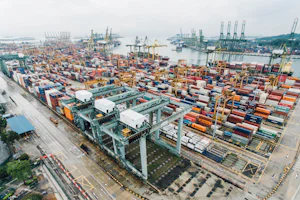
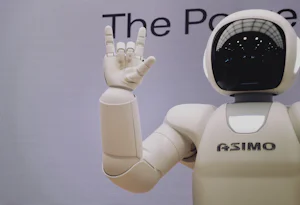
Washington spent July and August tightening the screws on foreign-made robots and drones, citing national security at every turn. But according to industry analysts who spoke with TechCrunch, the restrictions may do less to slow China's robotics industry than US policymakers hope — because the core of China's advantage is manufacturing scale, and scale does not respect tariffs.
In recent weeks the United States imposed steep tariffs on imported drones and their components, and expanded restrictions on advanced robotic systems. The drone tariffs take effect in September, with additional tariffs on components following in 2027. The moves extend a hardening posture that earlier this summer saw the FCC add foreign-made humanoids and robot dogs to its national-security restrictions. For more context on this story, see our ongoing artificial intelligence updates.
The Restrictions Stack Up
The centerpiece of the US regime is the FCC's Covered List, established in 2021 to target telecommunications and surveillance equipment from companies such as Huawei, ZTE and Hikvision. The list has since expanded to cover foreign-made drones and, most recently, advanced robotic devices.
The tariffs layer a financial barrier on top of the regulatory one. Taken together, the measures are designed to push US buyers toward domestic and allied suppliers in strategically sensitive categories.
But the restrictions arrive at a moment when Chinese manufacturers hold commanding positions in both drones and humanoid robots, often at prices Western rivals cannot match. That gap, analysts told TechCrunch, is the product of structural advantages that restrictions do not touch.
The Scale Gap, in Numbers
The humanoid robot market tells the story in a single statistic. Global humanoid shipments hit 22,000 units in the first half of 2026, according to a report by Counterpoint Research — and the vast majority came from Chinese manufacturers.
The world's five largest humanoid robot makers by shipments — AgiBot, Unitree, Galbot, UBTECH and Leju Robotics — are all Chinese, and together they accounted for 86 percent of global shipments in the first half of the year, per Counterpoint. US companies, by contrast, are operating at a far smaller scale, said Soumen Mandal, a principal analyst at Counterpoint Research.
The advantage compounds, said Ankur Saxena, an investment director at TDK Ventures. Lower prices let Chinese manufacturers put more robots into real-world use, which generates the data needed to improve the technology, while higher production volumes drive costs down further. Mandal added that Chinese humanoid makers are also cutting costs by bringing more of the technology stack in-house — Unitree is developing more components internally, and automakers like XPeng can lean on existing expertise in chips and vehicle manufacturing as they move into robotics.
"The United States leads in frontier AI, software and semiconductor innovation," Saxena told TechCrunch. "China leads in manufacturing scale, supply-chain depth and cost."
His bottom line was blunter: "You cannot sanction your way around a cost curve. You can only out-build it, and America has yet to begin making the decade-long investment that will require."
Where Chinese Robots Go Next
If Chinese robotics firms lose access to the US market, they are unlikely to lose much momentum. Saxena pointed to China's large domestic market and significant room to expand elsewhere, particularly in regions where demand for affordable automation is growing fast.
Mandal expects Chinese humanoid makers to target price-sensitive markets with severe labor shortages across Europe, Southeast Asia, Latin America and the Middle East. His forecast tracks the playbook of China's electric-vehicle industry: build scale at home, expand into overseas markets, then eventually establish local production abroad.
Countries facing labor shortages and demographic decline could become early adopters of humanoids, particularly in manufacturing, where robots can absorb repetitive work that employers are struggling to staff.
Two Ecosystems, Not One Market
The drone industry offers an early glimpse of where all of this may be heading. Bentzion Levinson, founder and CEO of Virginia-based drone maker Heven AeroTech, told TechCrunch the market is already splitting into two ecosystems: a US-led market built around American-made, NDAA-compliant systems, and a China-led market focused on low-cost, high-volume production.
Levinson, maliyetin belirleyici olmaya devam ettiği düşük kaliteli tüketici drone pazarında Batılı üreticilerin Çinli şirketleri yenebileceğine inanmıyor. Bunun yerine ABD'li ve müttefik firmaların, güvenlik gereksinimlerinin birim fiyattan daha fazla ağırlık taşıdığı savunma ve kritik altyapıya yönelik uzun menzilli otonom sistemlerde rekabet etmesini bekliyor.
Ayrıca, bir sonraki rekabet sınırının uçak gövdelerinden onlara güç veren teknolojiye doğru kaydığını, pil kısıtlamalarının enerji ve yük taşıma mimarisini giderek daha önemli bir savaş alanı haline getirdiğini savundu.
Parçalı Bir Pazar, Temiz Bir Bölünme Değil
Analistler TechCrunch'a şimdilik en olası sonucun ne Çin hakimiyeti ne de Amerika'nın yeniden canlanması, aksine parçalanma olduğunu söyledi: Çinli şirketler dünyanın büyük bir kısmına yayılırken, ABD'li ve müttefik üreticiler güvenlik gereksinimlerinin en önemli olduğu pazarlarda rekabet ediyor.
Bu dinamiğin, ihracat kontrollerinin Çin'in daha geniş teknolojik yükselişini durdurmadan öncü çip hedeflerini yavaşlattığı yarı iletkenlerde de yankıları var. Robotik, çiplerden farklı olarak tek bir geçiş noktası teknolojisine dayanmıyor; analistler bunun, ölçek farkının kararname ile kapatılmasını daha da zorlaştırdığını öne sürüyor.
İlk test, drone tarifelerinin yürürlüğe girdiği ve endüstrinin, ABD pazarı etrafındaki bir duvarın diğer yerlerde Çin ölçeğiyle bir arada var olup olamayacağını anladığı Eylül ayında gerçekleşecek.
---
Stay Ahead of AIGet the latest AI news, analysis, and breakthroughs — all in one place.
Read more AI news →